


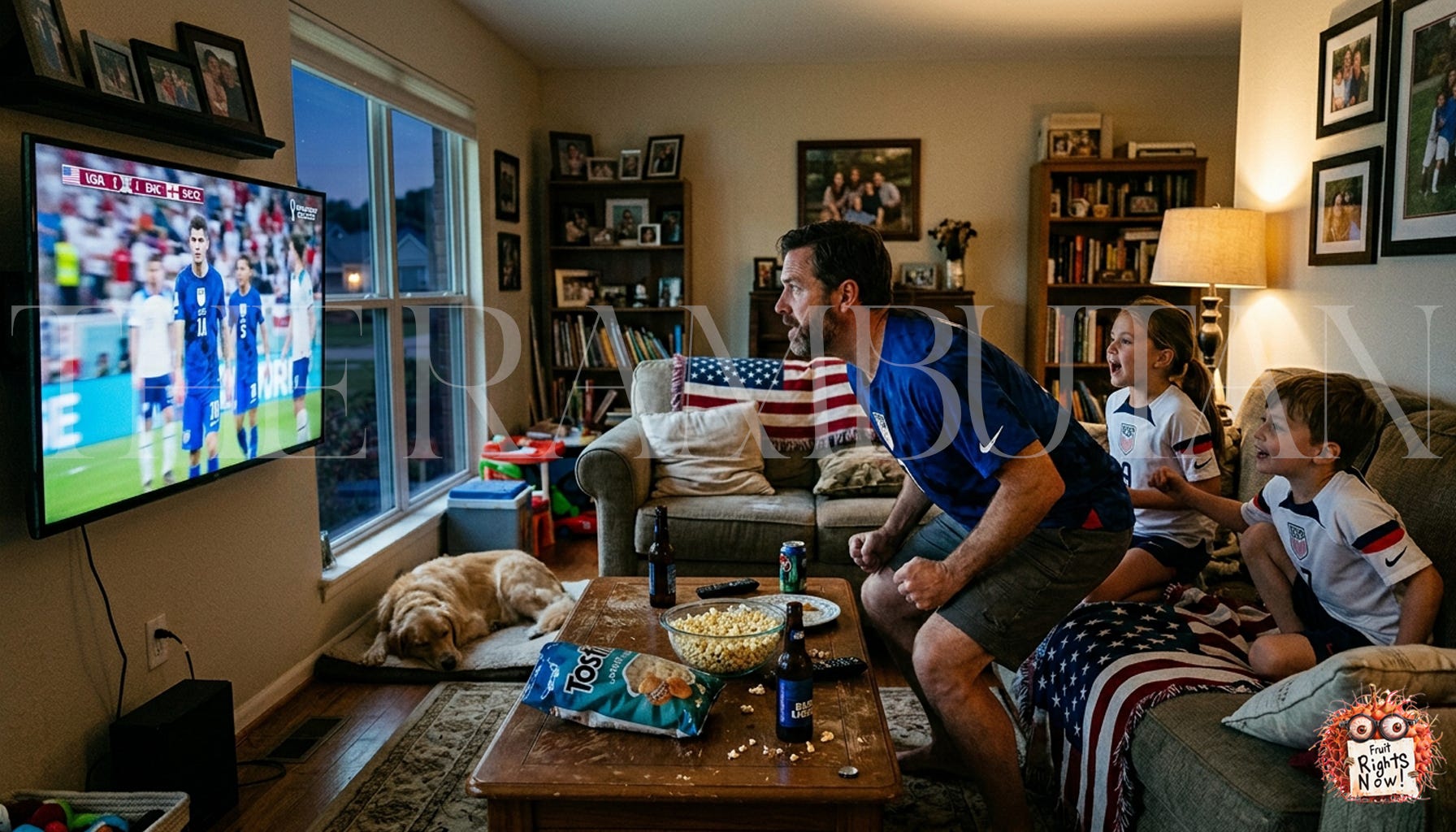
INGLEWOOD, CA — Millions of Americans were left confused this week after discovering that the United States Men’s National Team may, according to several reports, be “pretty good now.”
The revelation came shortly after the U.S. team delivered a commanding performance in its World Cup opener, causing ordinary citizens across the country to briefly pause their baseball games, in order to ask the same urgent question: “Wait, we have a soccer team?”
Authorities say the wave of national soccer awareness began sometime around halftime, when several dads in cargo shorts wandered into living rooms across America, saw the scoreboard, and realized the U.S. was not only playing soccer, but playing it in a way that did not immediately require everyone to say, “Well, at least the women’s team is good.”
Across the country, Americans were seen attempting to reconcile their deep patriotic duty to support the United States with their long-standing constitutional suspicion of any sport where the clock counts upward.
“We had several customers ask why no one was taking a timeout,” said Riley Jenkins, manager of Big Larry’s Wings & Screens in Columbus, Ohio. “One guy kept yelling for the quarterback to throw it deep. Another demanded to know why the goalie didn’t just run the ball into the other net himself. Honestly, it was one of the most engaged soccer crowds we’ve ever had.”
Experts say the moment may represent a turning point in America’s relationship with men’s soccer, which has historically consisted of one promising generation, four years of hype, one extremely disappointing group-stage exit, and then a solemn national vow to “really invest in youth development this time.”

President, governors, and local officials reportedly monitored the situation closely as watch parties spread across the country. Some public schools briefly considered adding emergency soccer literacy lessons after teachers noticed students asking informed questions such as, “Why didn’t he use his hands?” and “Is Paraguay near Portugal?”
Meanwhile, cable news networks scrambled to reassign panelists who normally discuss foreign policy, inflation, or celebrity divorces to suddenly provide analysis on defensive formations.
One network reportedly brought in a retired NFL punter to explain soccer strategy, as executives determined he had “probably kicked something before.”
“This team is fast, organized, and dangerous in transition,” said the punter, reading from a card handed to him six seconds earlier. “Also, I believe the key to victory is scoring more goals than the other country, which I think both sides will be trying to do.”
Not everyone welcomed the sudden surge in enthusiasm. Longtime American soccer fans expressed frustration that millions of casual viewers were now joining the bandwagon after years of ignoring their carefully organized watch parties at 7:30 a.m.
“I suffered through decades of people asking why there aren’t more goals,” said Portland resident and self-described soccer purist Evan Castillo. “Now these same people are texting me asking where they can buy a jersey and whether Christian Pulisic is ‘our Messi guy.’
Despite the confusion, experts believe the country may be entering a new phase of reluctant soccer acceptance, especially if the U.S. continues to win and allows Americans to participate in the one international tradition they understand perfectly: being obnoxiously confident after a small sample size.
We write the headlines that haven’t happened yet, but probably will. Subscribe to The Rambutan for Southeast Asia’s sharpest fake news.