


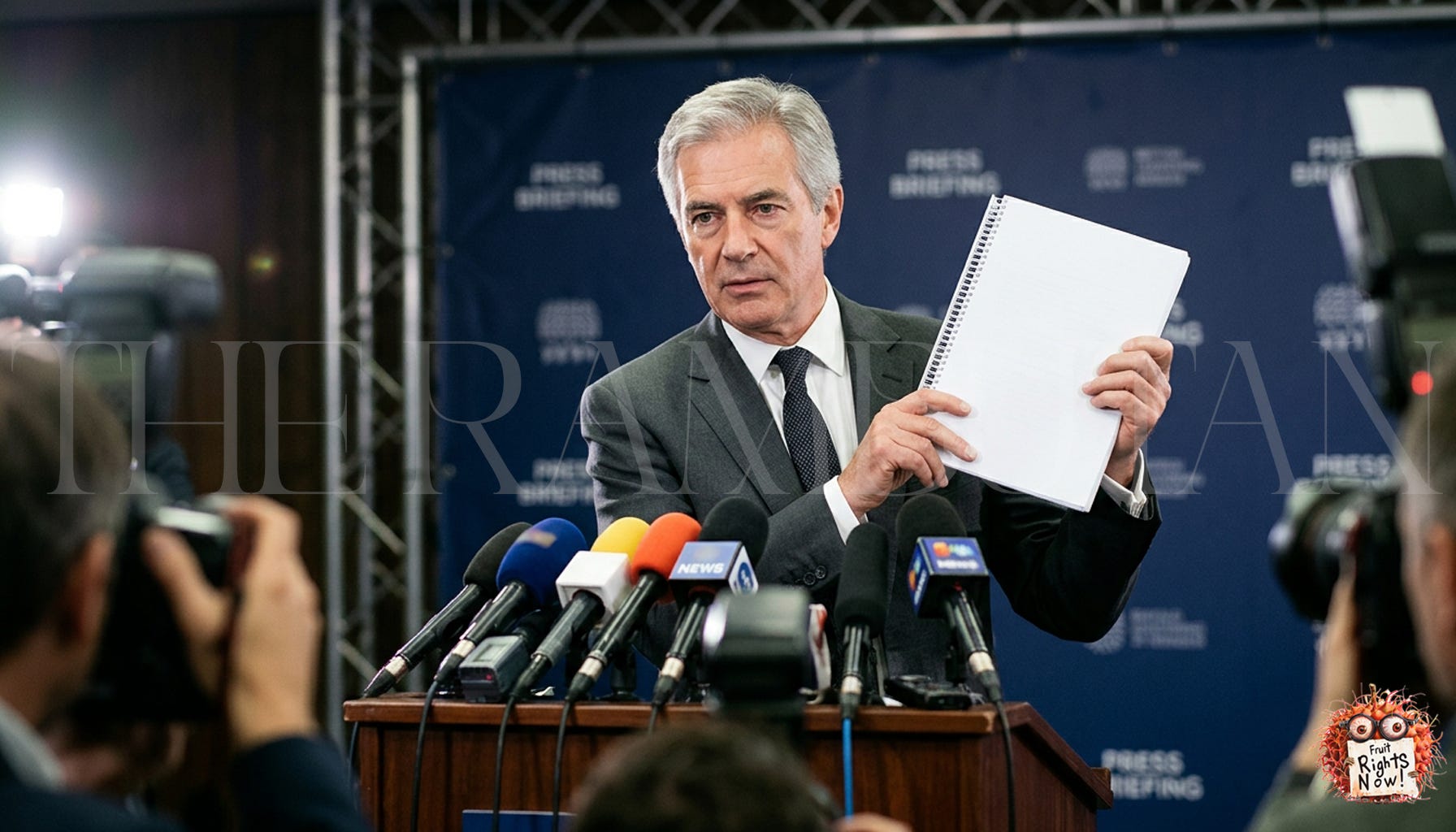
LONDON — Following an internal probe, an independent panel consisting of six senior BBC directors announced Thursday that the British Broadcasting Corporation remains completely free of any institutional bias whatsoever.
The tribunal, commissioned in response to an avalanche of external whistleblower complaints alleging systemic toxicity, political slant, and hostile workplace echo chambers at the public broadcaster’s Central London headquarters, reached a unanimous verdict: the BBC is not only completely impartial, but may in fact be the most objective collection of human beings ever assembled on the British Isles.
“When the public leveled these accusations of ideological groupthink against us, we knew there was only one body on earth with the moral authority necessary to investigate us: ourselves,” said Sir Alistair Finch-Pemberton, the BBC’s Executive Deputy Vice-Chancellor of Impartiality. “After staring into our own collective eyes in the mirror, we were deeply moved by our own integrity. We have cleared ourselves of all charges with flying colors.”
The committee’s fact-finding process was described by internal spokespeople as “forensic in its thoroughness.” According to a heavily redacted executive summary, the six directors sat in a circle in the executive boardroom at Broadcasting House and took turns asking each other if anyone present felt biased.
When all six answered “absolutely not, darling,” the panel adjourned for lunch at a nearby gastropub to allow their findings to settle.
“It was an emotionally draining exercise, but the license-fee payers deserved transparency,” explained Dame Fiona Sterling, Head of Editorial Affairs. “We reviewed hundreds of pages of external complaints filed by former producers, staff journalists, and independent media watchdogs. Most of them complained that our coverage routinely treats half the country like uneducated barbarians who need to be scolded by a 24-year-old with a degree in Post-Colonial Drama from Sussex. We cross-referenced these complaints against our own opinions, found a glaring discrepancy, and concluded the complainants were suffering from false consciousness.”
The inquiry noted that out of an abundance of caution, the panel briefly considered interviewing an outside party but abandoned the idea after realizing that non-BBC employees might introduce external viewpoints that could contaminate the impartiality of the findings.

While the panel exonerated the corporation from allegations of political prejudice, workplace antisemitism, and institutional hostility toward dissenting worldviews, the report did uncover one organizational failure that brought several executive committee members to the brink of tears.
Paragraph 414 of the report revealed that on Tuesday, November 17, the third-floor breakout lounge suffered a 45-minute outage of Swedish oat milk, forcing senior fact-checkers to either take their macchiatos black or risk consuming semi-skimmed cow’s milk like 19th-century chimney sweeps.
“The trauma of that morning cannot be overstated,” the report noted, recommending an immediate £4.2 million emergency operational grant to establish a redundant dairy-alternative pipeline across all regional studios. “While we found zero evidence of toxic culture directed toward traditionalists or religious minorities, forcing an associate digital editor to drink almond milk is something this corporation must confront remorsefully.”
Staff members across Broadcasting House praised the finding. “It was horrifying,” noted one anonymous senior culture correspondent. “I was in the middle of drafting an explainer on why working-class patriotism is a psychological disorder, and I had to wait until quarter past eleven for the procurement team to restock the unsweetened soy. No journalist should have to endure those kinds of conditions.”

Addressing current and former staffers whose allegations triggered the inquiry in the first place, the report recommended that whistleblowers be enrolled in a four-week “Perspective Recalibration Seminar.” The curriculum will reportedly focus on helping disgruntled employees understand that whenever they perceive blatant bias in BBC programming, they are actually just perceiving truth, and justice.
The report concluded with a strongly worded recommendation that the British government immediately increase the annual television license fee by 18 percent, warning that without additional taxpayer funding, the corporation might not have enough resources to conduct next year’s internal investigation into whether its management team deserves another self-awarded diversity bonus.
Following the formal press briefing, the tribunal members exchanged commemorative trophies, praised their own courage in the face of relentless outside scrutiny, and returned to their desks to begin drafting completely neutral, perfectly balanced news stories about why anyone who questions their findings is an immediate threat to democracy.
We write the headlines that haven’t happened yet but probably will. Subscribe to The Rambutan for Southeast Asia’s sharpest fake news.