


SINGAPORE — The official core inflation rate for Singapore has fallen to 1.2%, prompting jubilant celebrations in government press rooms and quiet questioning in every HDB corridor and kopitiam nationwide.
“Look, the numbers don’t lie,” said Dr. Eunice Foo, Senior Director of Economic Metrics. “Core inflation is down, stable, under control. It’s a textbook success.”
But ask your average Singaporean and they’ll tell you something very different.
“I heard inflation was 1.2%,” said Mr. Tan from Ang Mo Kio, sipping a kopi. “But I swear I paid double for this cup compared to, like… last Thursday.”
Mrs. Lim of Bedok agreed: “I don’t know much about macroeconomics, but if you put two bananas next to each other and call one 1.2% larger, I’m still going to feel robbed.”
According to official reports, Singapore’s core inflation shows prices are barely ticking up. This is “good news,” analysts say.
Yet ordinary Singaporeans have taken to social media quoting a separate metric they invented themselves: the “Kaya Toast Reality Index”.
“Last year, a set meal at the hawker was $5.50,” wrote @HawkerHero on X. “Now it’s $11.25. That’s roughly 1.2% if you round down twice and treat math as optional.”
“I tried to apply the official inflation rate to my grocery bill,” said @RiceRollRider. “It told me to take out a loan, re-mortgage my BTO, and consider living on a diet of air instead.”
Economic experts defended their calculations with soothing phrases like “hedonic adjustments” and “base effects”, which, according to linguists, are just fancy ways of saying nobody really knows but it sounds reassuring.

The disconnect between government statistics and lived experience has inspired everything from academic papers to dinner‑table debates.
Mrs. Chong, a mother of two from Tampines, summarized the sentiment perfectly:
“My electricity bill went up. My kid’s tuition went up. Even my gym membership went up. Only the inflation number went down. That’s the kind of magic I want at the next family gathering.”
Economists explain that core inflation excludes items like housing and energy.
“By excluding more expensive categories, the core figure ebbs and flows,” said Professor Lim Wei‑Sheng of the National University. “But everyday consumers… they feel prices of everything.”
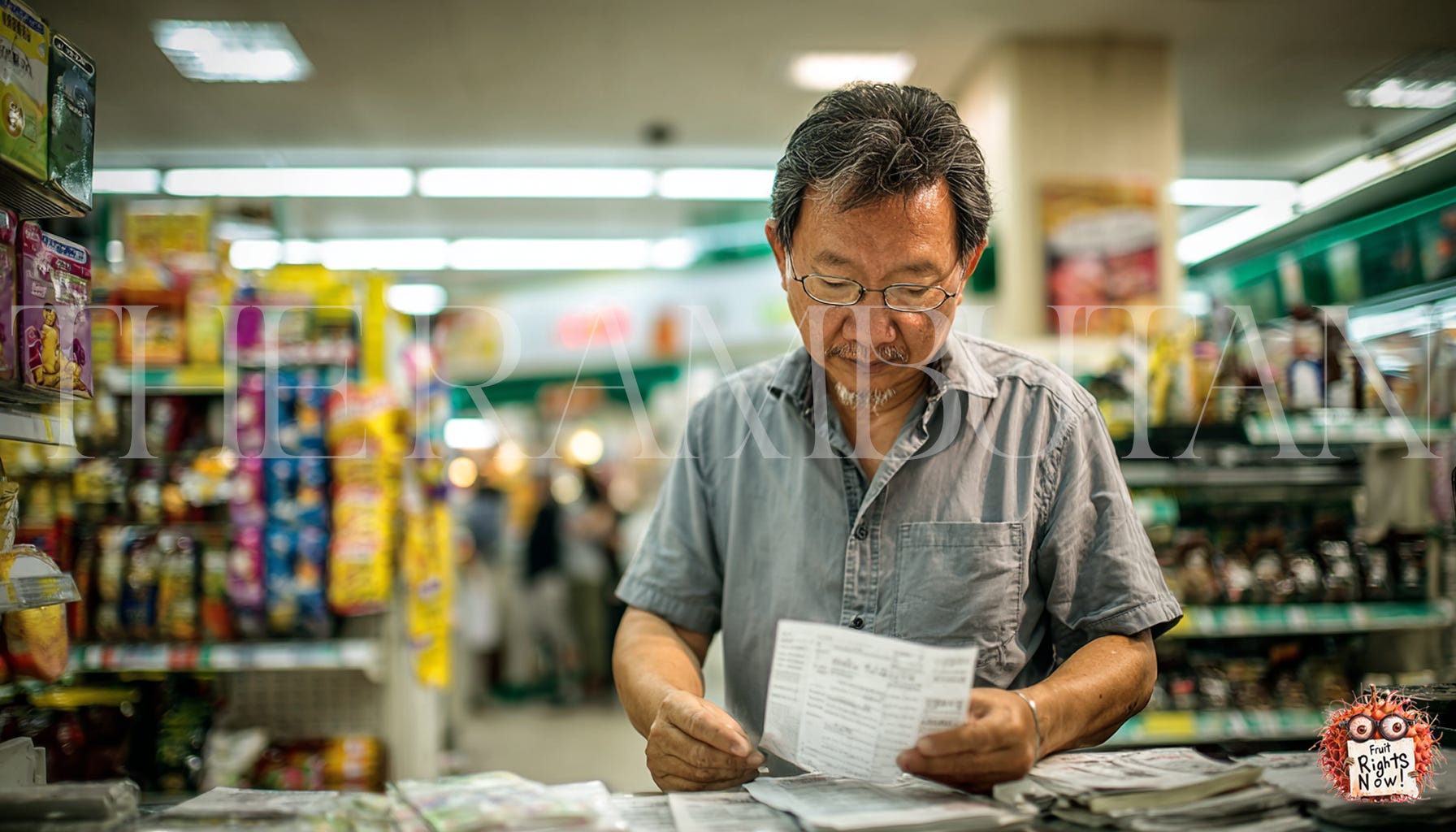
The public reaction has ranged from philosophical to comedic. One popular TikTok trend involves people holding up receipts and whispering “1.2%” dramatically in the face of their actual totals.
In Parliament, one MP jokingly suggested printing the official inflation rate on receipts alongside the actual total.
“That way,” he said, “people can feel both the joy of good economic policy and the sting of reality simultaneously.”
When asked to comment, the Monetary Authority offered this profound statement:
“Prices fluctuate, and people feel things differently. That is the miracle of a market economy.”
We write the headlines that haven’t happened yet, but probably will. Subscribe to The Rambutan for Southeast Asia’s sharpest fake news.