


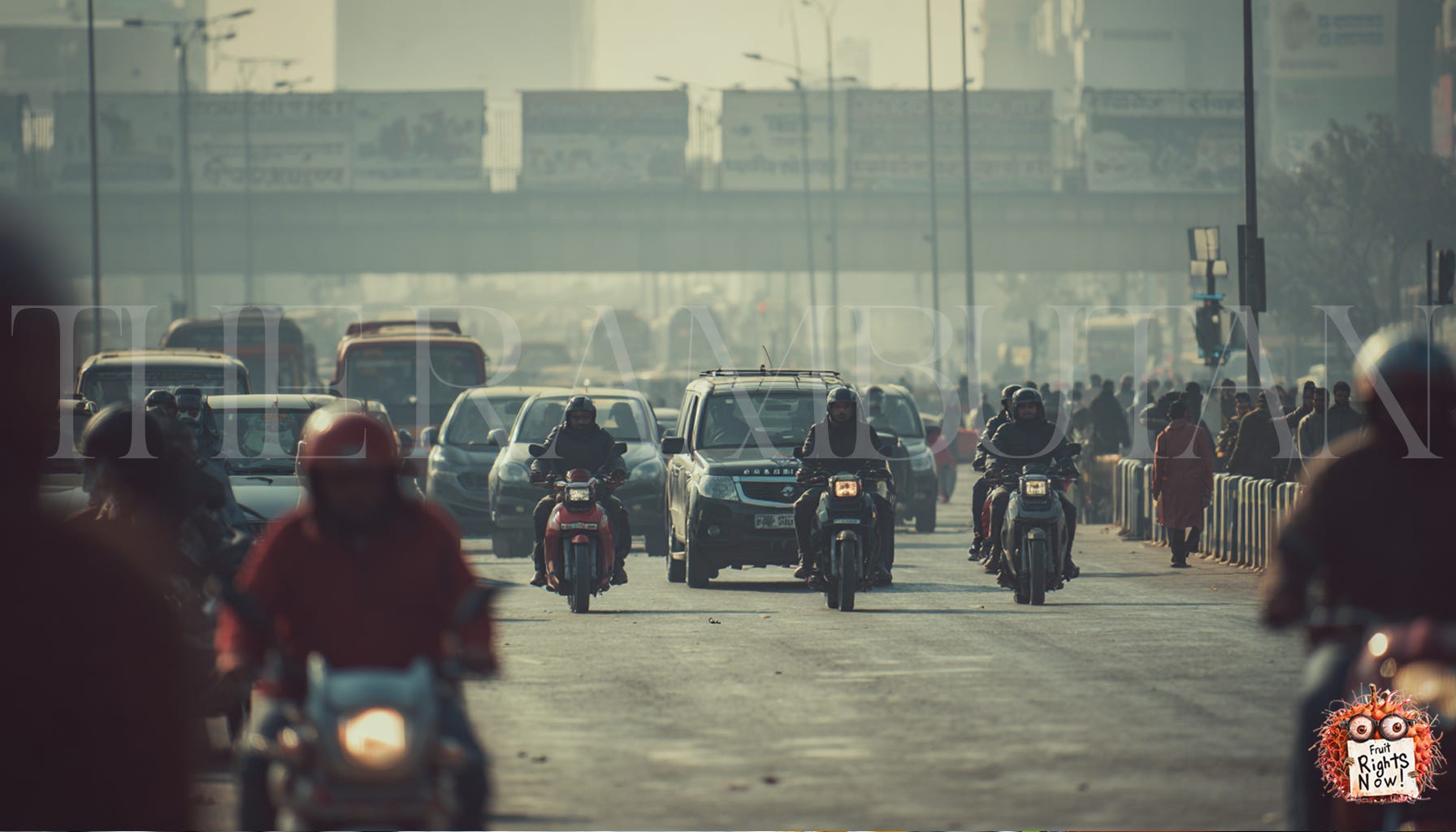
NEW DELHI — The Delhi government officially banned all non‑BS6 vehicles from the capital this week, citing public health concerns, climate responsibility, and the urgent need for citizens to “do their part.”
Within hours of the announcement, sources confirmed that every ministerial vehicle, convoy SUV, and discreetly tinted government sedan had been upgraded to BS6-compliant models, many of which appeared to materialize overnight.
Officials assured the public that this coincidence was purely administrative and in no way related to access, privilege, or knowing people who know people.
Under the new restrictions, millions of Delhi residents were instructed to immediately stop using older vehicles, even if those vehicles were functioning, regularly serviced, and had recently passed pollution checks.
“I understand why my 12-year-old scooter is suddenly a criminal,” said local resident Ramesh Kumar. “I just didn’t realize the solution involved ministers getting brand-new cars.”
Meanwhile, inside government compounds, aides were reportedly busy confirming delivery schedules, and upholstery options.
One senior official, speaking on condition of anonymity because he was mid-test-drive, clarified the policy:
“This is not about privilege. It’s about leadership. Leaders must lead from the front… seat of a BS6 diesel SUV with ‘executive white’ leather interiors.”
Environmental experts praised the ban as a necessary step while admitting it would have limited impact as long as traffic congestion, construction dust, and political press conferences continue uninterrupted.

As part of the crackdown, fuel stations across the city began enforcing the “No PUCC, No Fuel” rule, forcing motorists to produce pollution certificates, and ID proof.
“I went to get petrol and left with a lecture,” said software engineer Ananya Singh. “They asked me when my last emission test was. I asked them when the last policy was tested.”
Fuel station operators confirmed that enforcement was strict, uniform, and highly flexible depending on who was inside the vehicle.
“If it’s a regular citizen, we check everything,” said one attendant. “If it’s a car with a red beacon-shaped aura of authority, the pump develops temporary blindness.”
At a press briefing held outdoors despite hazardous air quality, officials reiterated that the vehicle ban would usher in a new era of breathable Delhi air, possibly as early as next week.
“The data is very clear,” said a spokesperson. “If citizens stop driving, and ministers continue as usual, pollution will be reduced.”
When asked whether replacing millions of private vehicles while expanding government convoys might defeat the purpose, the spokesperson nodded sympathetically and said, “You’re thinking emotionally, not administratively.”
We write the headlines that haven’t happened yet, but probably will. Subscribe to The Rambutan for Southeast Asia’s sharpest fake news.