


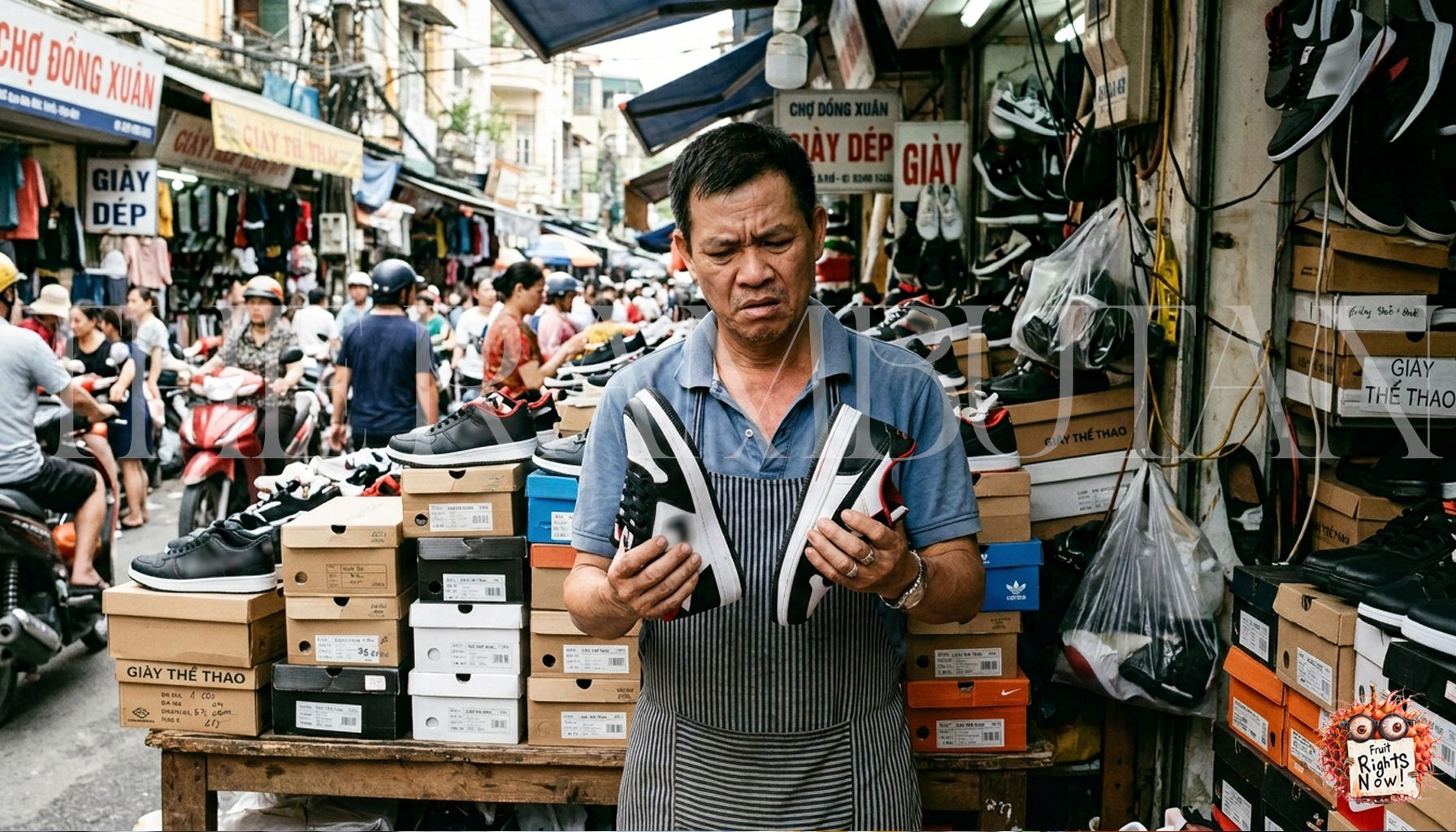
HANOI — Several sellers of counterfeit luxury goods have come forward to complain that their fake products are now being copied by even less reputable counterfeiters, sparking what industry insiders are calling “a crisis of authenticity in the fake-goods community.”
The controversy began this week after a group of unauthorized sportswear vendors in Hanoi discovered that their imitation Nike shoes, which they had carefully sourced from a supplier who was also not authorized by Nike, were being replicated by another group of sellers offering even cheaper fake versions online.
“This is outrageous,” said one seller, who asked to be identified only as “Mr. Long.” “We worked very hard to build trust with customers who know our Nike products are fake, but at least they are our fake Nike products. Now someone is making fake versions of our fake Nike. Where is the integrity?”
The dispute has quickly spread across Vietnam’s online marketplace ecosystem, where customers regularly encounter designer handbags, sneakers, and “100% authentic” football jerseys priced at the exact level one would expect from something that is absolutely not authentic.
Several counterfeit vendors say the rise of what they are calling “second-generation fakes” threatens the reputation they have spent years carefully manufacturing without permission.
“We are not criminals,” said one handbag seller in Ho Chi Minh City. “We are entrepreneurs. We provide affordable access to the emotional experience of pretending to own expensive things. But these new people are pretending to sell the things we are already pretending to sell. It is unethical.”
The seller said she first noticed a problem when longtime customers began complaining that their counterfeit handbags were falling apart after only two days, rather than the industry-standard three to six weeks.
“That is not our quality,” she said. “Our bags may not be approved by the original brand, or any brand, but we still have pride.”

The scandal has also caused confusion among shoppers, many of whom say they now face the difficult task of determining whether the fake product they are buying is a reliable fake, a fake fake, or a fake fake being marketed as a premium fake.
“I wanted a pair of shoes that looked like Nike but were obviously not Nike,” said 22-year-old university student Minh Anh. “But when they arrived, I realized they were not even convincing fake Nike. They were fake fake Nike.”
Minh Anh said the shoes began squeaking before she put them on and came with a tag reading, “Just Done It.”
E-commerce experts say the fake-goods sector has become increasingly sophisticated, with sellers now using tiered authenticity language to distinguish between products that are unauthorized, or extremely unauthorized.
In response to the controversy, some counterfeit sellers have reportedly asked local authorities to take action against the unauthorized sellers copying their unauthorized products.
A small group of vendors even drafted a complaint accusing rival sellers of “intellectual property theft,” before realizing several implications and changing the phrase to “business unfairness.”
“We are asking for protection,” said Long, the sneaker vendor. “Not from Nike. Obviously, Nike would not understand. We are asking for protection from people who are damaging the reputation of fake Nike sellers everywhere.”
When asked whether Nike might also feel that its reputation had been damaged, Long dismissed the question as “Western thinking.”
Legal observers say the vendors may have difficulty proving damages, since doing so would require them to demonstrate ownership of products they do not own, and trademarks they did not create.
Still, the sellers insist the issue is not about legality but ethics.
“There is honor in business,” said the handbag vendor. “Even fake business.”
We write the headlines that haven’t happened yet, but probably will. Subscribe to The Rambutan for Southeast Asia’s sharpest fake news.