


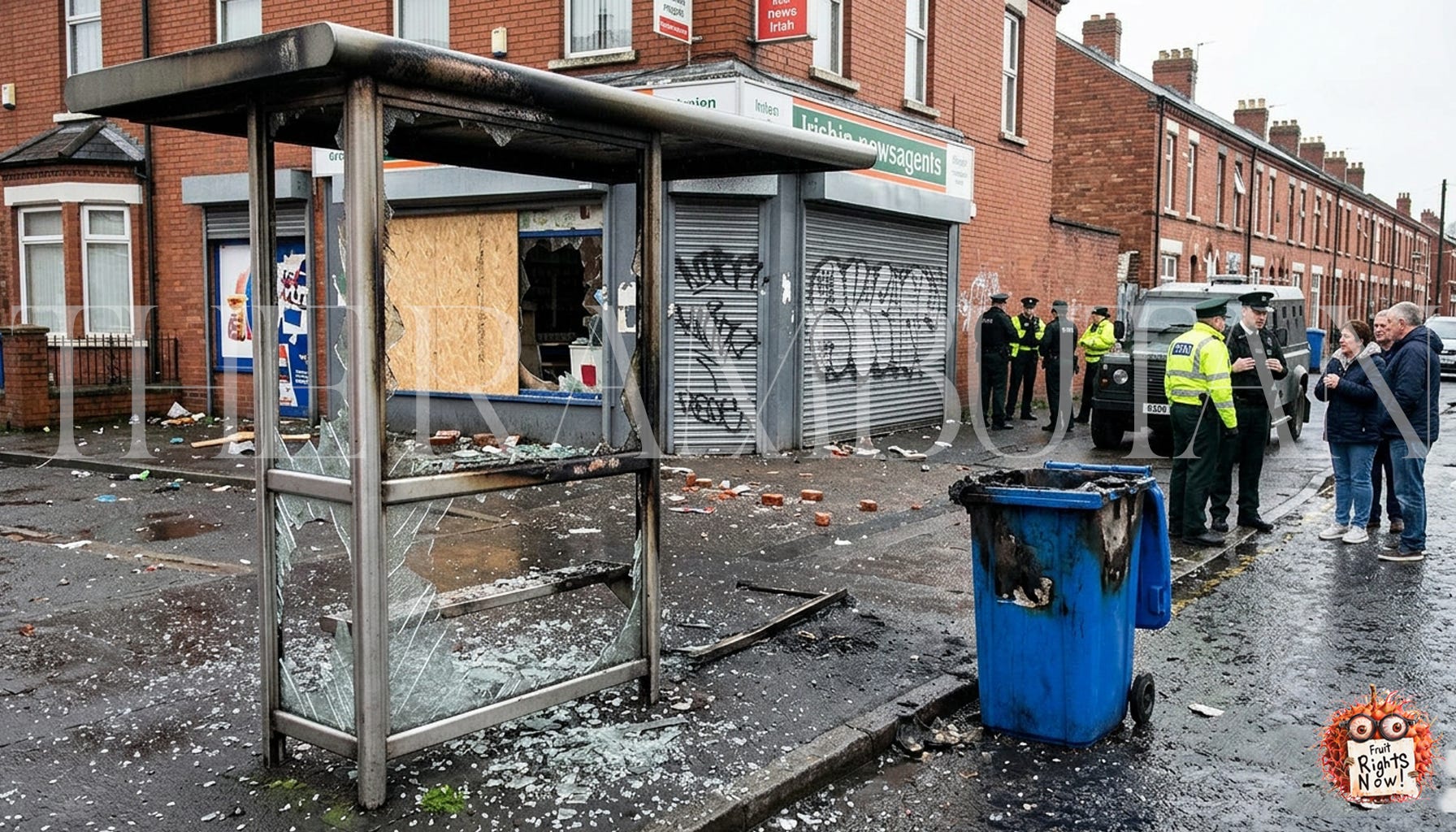
BELFAST — Far-right demonstrators across parts of the UK have discovered that setting fire to cars, and hotels does not, in fact, make a local community safer, or more pleasant to live in.
According to witnesses, the demonstrators had gathered to express concern about crime, and immigration, before deciding the most obvious solution was to smash windows, frighten residents, and torch property.”
Local resident Margaret Ellis, 67, said she initially assumed the crowd had arrived to protect the community, as many of them were chanting about protecting the community.
“Then they set fire to the bus stop I use to get to my hospital appointment,” she said. “So I did begin to wonder whether their community protection strategy had some flaws.”
Community leaders say the unrest has created a rare moment of public education, as many participants were forced to confront the long-established scientific consensus that fire tends to damage objects rather than repair them.
Several protesters rejected the findings however, arguing that the damage was necessary to send a message.
When asked what the message was, one man replied, “That we won’t tolerate people making this area dangerous.”
He then allegedly helped push a flaming bin into the road.
Another demonstrator, who identified himself only as “Patriot Dave,” said the media was deliberately misrepresenting the protest by focusing too much on the fires.
“They always show the burning things,” he said. “They never show the peaceful bit beforehand, when we were just standing around shouting that the country had fallen apart.”
Asked whether burning local property might contribute to the country falling apart, Dave said that was “exactly the kind of trick question the elites want you to ask.”

Residents in affected areas have expressed confusion over how exactly the protests were meant to improve their lives, given that many woke up to damaged streets, and closed shops.
“I was told they were angry because the community was under pressure,” said shopkeeper Raj Mehta, whose front window was cracked during the unrest. “It really made me reflect on the deep cultural heritage of smashing up a local business because you saw something online and became emotional,” he said.
Local councils have also been forced to divert resources toward cleaning up damage caused by people who had gathered to complain that public resources were being stretched.
A council official, speaking anonymously because he “could not face another man in a flag shouting at him,” said the clean-up operation was already underway.
By Friday morning, local authorities reported that calm had returned to several affected areas, though residents remained nervous that another group of people might soon arrive to defend the community from the previous group of people defending the community.
Police have urged the public to avoid speculation, and consider the possibility that a grainy 14-second video posted by a man called “TruthHammer1776” may not contain the full context of a complex local incident.
Meanwhile, community volunteers were seen cleaning streets, and generally doing the sort of work protesters had claimed to support before making it necessary.
Asked whether he had learned anything from the unrest, one arrested protester said he remained proud of standing up for his town.
“Someone had to defend this place,” he said.
When reminded that he did not live there, he declined to comment.
We write the headlines that haven’t happened yet, but probably will. Subscribe to The Rambutan for Southeast Asia’s sharpest fake news.