


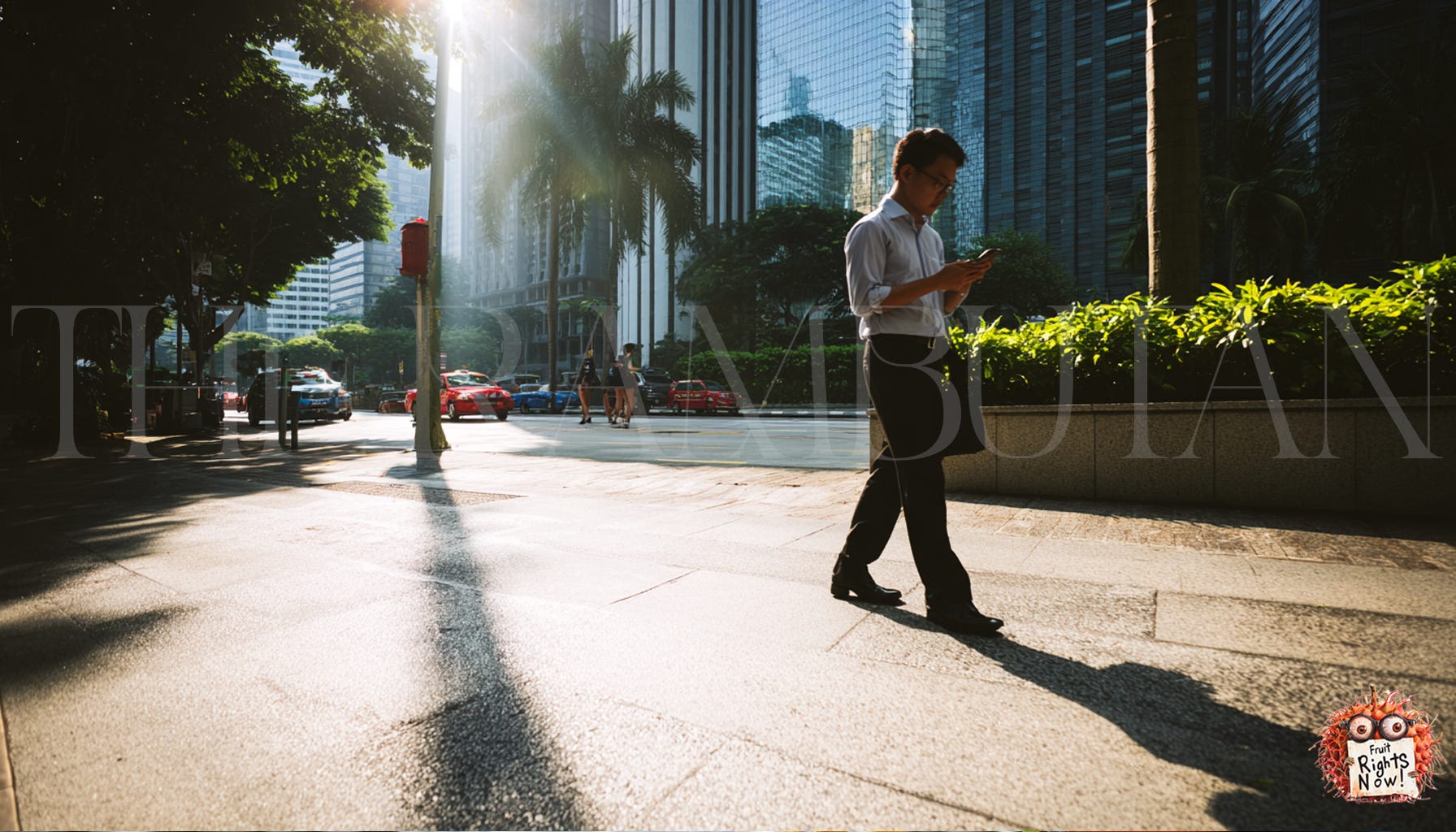
SINGAPORE — Ride‑hailing platform Grab announced another round of fee increases this week, assuring customers the move was not about profits, market dominance, or shareholder expectations, but about personal growth.
According to Grab, the new pricing structure is designed to help users “reconnect with their physical environment,” and “rediscover perseverance”.
“This is not a price hike,” said Grab spokesperson Ms. Elaine Koh. “It’s a lifestyle intervention.”
Grab executives explained that internal data showed a worrying trend: customers were booking rides for distances shorter than the average hawker queue.
“We saw rides of 400 metres. Some were 200,” Koh said gravely. “One customer booked a car to cross the road.”
Concerned that Singaporeans were losing essential survival skills, Grab convened a task force made up of economists, and wellness consultants.
“The conclusion was clear,” said Koh. “People need to walk more. But they won’t. Unless it hurts financially.”
Under the new fee structure, users will now experience what Grab calls a “Moment of Consideration” before confirming a booking.
Grab insists this moment is not meant to shame users, but to “invite them into a dialogue with themselves.”

Public reaction to the announcement was immediate.
“I opened the app, saw the price, closed the app, and just stood there for a while,” said Mr. Daniel Ong, 31, who attempted to book a ride from Tiong Bahru Plaza to his block. “That’s when I realised… I could walk. I just didn’t want to.”
Ong eventually walked home, a journey he described as “spiritually rewarding.”
“I noticed trees,” he said. “I noticed sounds. I noticed that Singapore is actually quite humid.”
Other users reported similar experiences. Some described discovering pedestrian paths they never knew existed. One woman said she walked so much she “ran out of podcasts.”
Fitness professionals have cautiously praised the move.
“From a public health standpoint, this is genius,” said Mr. Calvin Teo, a personal trainer. “Fear of paying $28 for a short ride is a powerful motivator.”
However, not all customers are convinced.
“I didn’t download Grab to find myself,” said Ms. Farah Rahman, 27. “I downloaded it to avoid being seen in public.”
Grab executives framed the fee increase as part of a broader vision for the nation.
“We are future‑proofing mobility,” said Koh. “Fuel prices fluctuate. Technology changes. But walking? Walking is timeless.”
At press time, several users were spotted walking briskly along pavements, phones in hand, staring at Grab prices they had already decided not to pay.
Grab, meanwhile, reiterated its commitment to “moving people,” whether by car, by foot, or by gently nudging them toward personal development.
We write the headlines that haven’t happened yet, but probably will. Subscribe to The Rambutan for Southeast Asia’s sharpest fake news.