


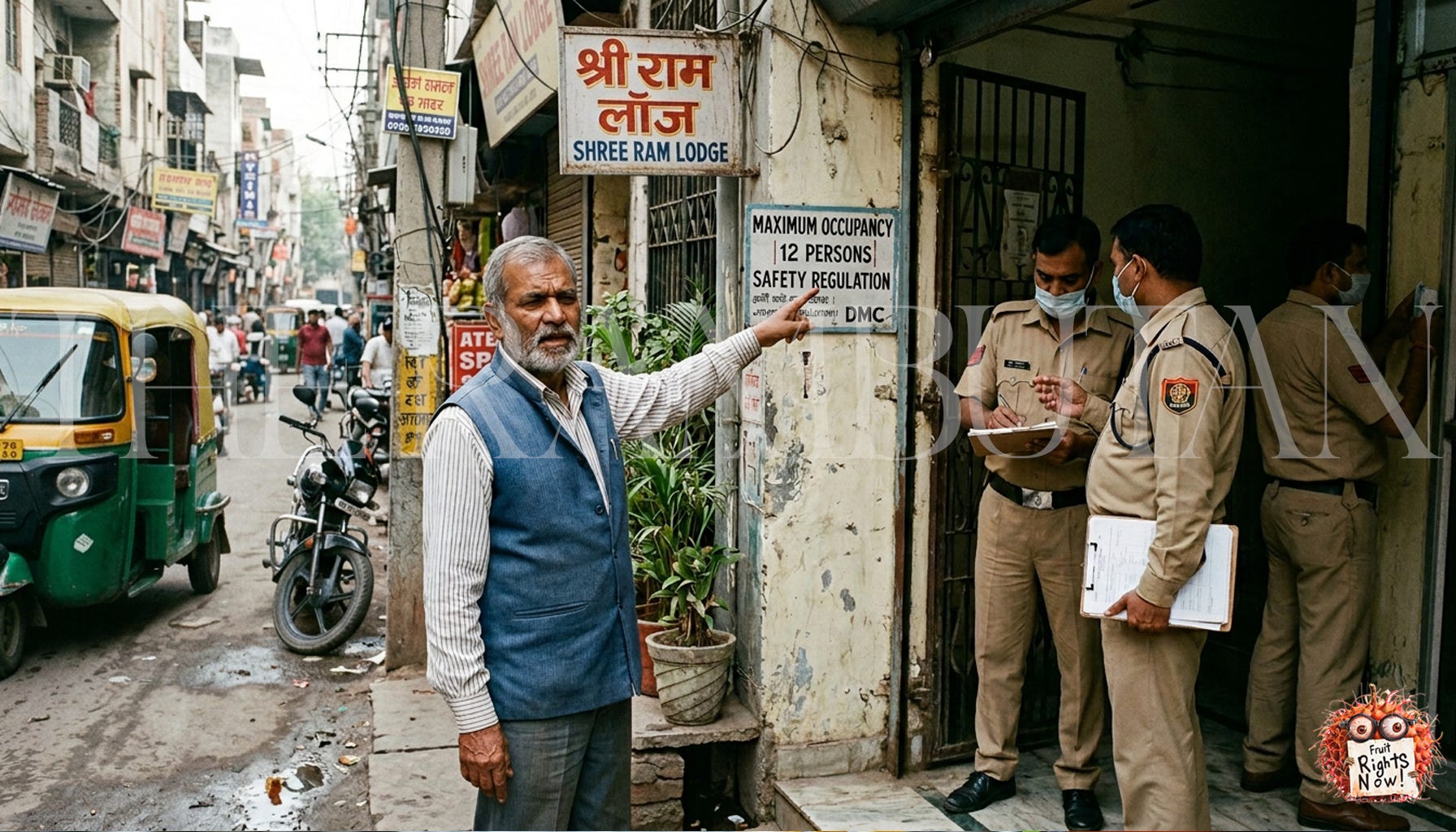
NEW DELHI — Local guesthouse operator Rajiv Malhotra expressed genuine surprise this week after municipal officials informed him that the phrase “maximum occupancy” was not, in fact, a government-issued performance benchmark meant to inspire entrepreneurs to reach their full potential.
According to authorities, Malhotra’s guesthouse had been operating with more guests, and “temporary sleeping arrangements” than the building was legally permitted to contain.
Malhotra, however, insisted the entire situation was the result of a simple misunderstanding.
“When I saw the sign that said ‘Maximum Occupancy: 42,’ I assumed it meant we should aim for at least 42 and then push beyond it, the way great business leaders do,” Malhotra told reporters.
Malhotra said he had always considered himself a responsible businessman because he took every safety regulation “very seriously.”
“Fire exits? We had them,” he explained. “Some were behind cupboards, yes, but that is because space in Delhi is expensive. Also, in an emergency, people become very resourceful.”
The guesthouse owner also defended his decision to convert several utility areas into guest rooms, saying he was merely responding to market demand.
Inspectors reportedly found one “executive compact suite” measuring slightly larger than a cupboard. When asked why the room had no window, Malhotra said guests had praised the feature because it helped them “disconnect from the chaos of the outside world.”

Local authorities have since launched an awareness campaign to help business owners understand that safety limits are not aspirational goals.
“We are seeing widespread confusion,” said one official from the municipal fire department. “Some establishments appear to believe that if a certificate says the building can safely hold 50 people, then holding 95 people proves excellent utilization of infrastructure.”
The official paused before adding, “That is not what that means.”
Officials said they were particularly concerned by the number of operators who treat safety inspections like exam season.
“Many establishments become deeply committed to fire safety shortly after a fire,” the official said. “We are trying to move that commitment slightly earlier.”
Former guests of the property offered mixed reviews of Malhotra’s management philosophy.
One guest said the guesthouse’s overcrowding created a strong sense of community.
“You really got to know people,” she said.
Malhotra said he took great pride in creating a compact, high-energy environment.
“Some hotels waste space with lobbies,” he said. “We used our lobby for guests. Also breakfast. Also laundry. Also parking two scooters during rain.”
When asked whether he would reduce the number of guests in the future, Malhotra said he was open to change.
“Of course, safety is very important,” he said. “We will definitely review all procedures, and update our signage.”
However, Malhotra remained concerned about the financial impact of following the rules exactly.
“If we only allow the legal number of people inside, then what am I supposed to do with all the extra mattresses?” he asked. “Just not put people on them?”
We write the headlines that haven’t happened yet, but probably will. Subscribe to The Rambutan for Southeast Asia’s sharpest fake news.