


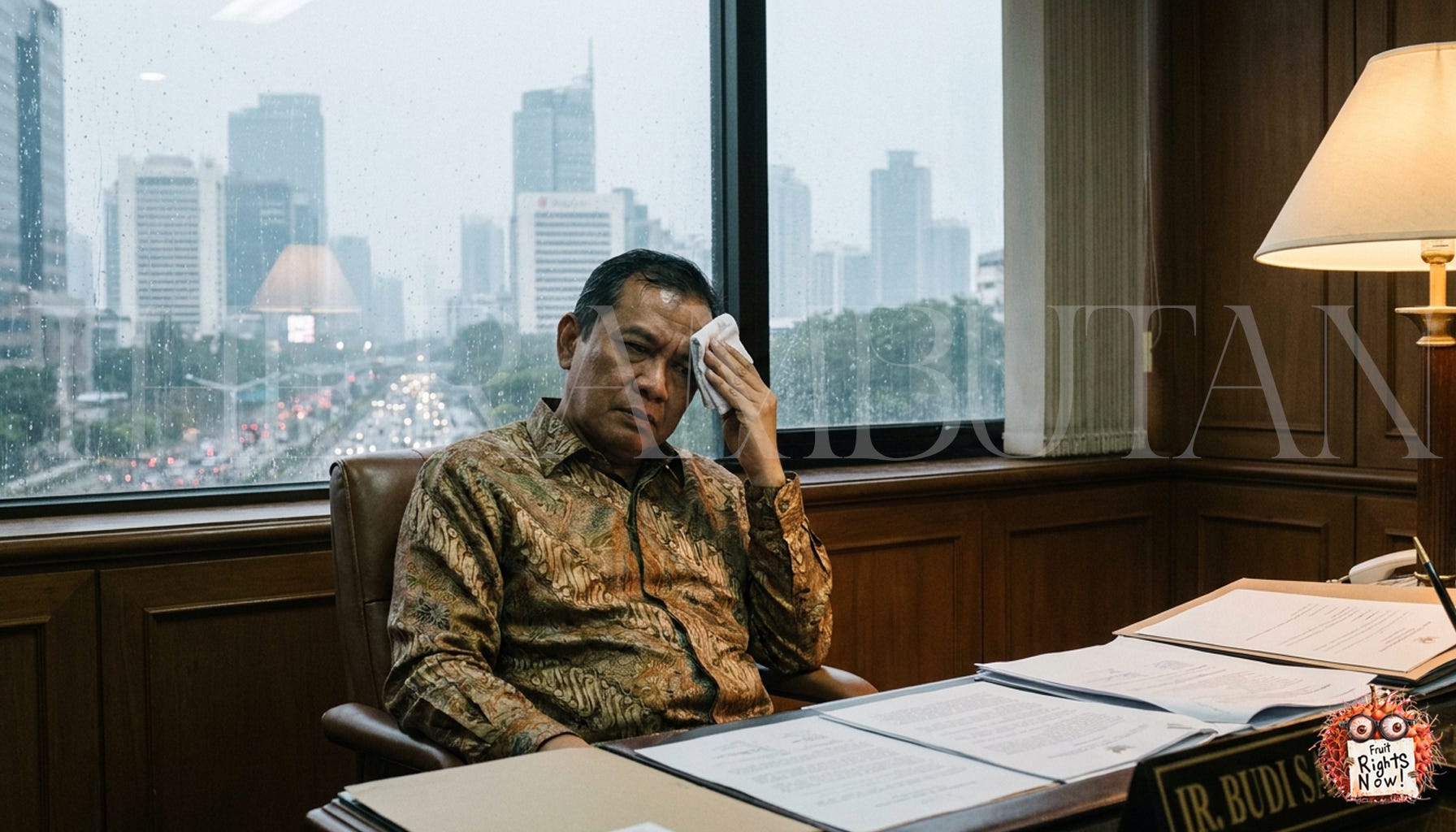
JAKARTA — As the Indonesian Parliament edges closer to ratifying the long-delayed Asset Seizure Bill (RUU Perampasan Aset), a high-ranking official expressed concerns this week that the legislation could inadvertently foster a “hostile and exclusionary workplace environment” for the nation’s most dedicated career corruptors.
The spokesperson, speaking on the condition of anonymity, argued that the bill fails to account for the grueling labor-intensive nature of high-level embezzlement.
“We talk a lot about labor rights and workplace equity in 2026, yet we are prepared to strip away the hard-earned fruits of a man’s labor just because that labor involved a series of complex, unrecorded offshore wire transfers,” the official stated. “This bill sends a chilling message to the thousands of bureaucrats who stay up until 3:00 a.m. thinking of creative names for shell companies. It says: ‘Your overtime doesn’t matter.’”
According to institutional experts, “budgetary redirection” has become a sophisticated discipline that requires years of specialized training. The spokesperson noted that the public often forgets the mental toll of maintaining three separate sets of accounting books while simultaneously attending ribbon-cutting ceremonies for bridges that only exist on paper.
“Do you have any idea how much mental energy it takes to remember which cousin owns which construction firm?” the official asked. “There is a level of craftsmanship involved in hiding Rp500 billion inside a network of laundromats in Singapore. When the state moves to seize those assets without a ‘definitive criminal conviction,’ it’s effectively telling our most industrious civil servants that their professional portfolio is worthless. It’s professional gaslighting, plain and simple.”

Critics within the bureaucracy are warning of a potential “Great Resignation” among corrupt officials if the bill passes. They argue that if the incentive is removed, the motivation to engage in public service will evaporate overnight.
“If you take away the pot of gold at the end of the rainbow, why would anyone even bother to mismanage a provincial social aid fund?” asked one senior consultant. “We are looking at a total collapse of institutional ambition. Our younger generation of sub-district heads needs to know that if they put in the work, there is a reward waiting for them. This bill essentially implements a 100% tax on initiative.”
The spokesperson further lamented that the bill creates an “unlevel playing field,” favoring those who are “boringly honest” over those who have spent decades honing their skills in the “shadow economy.” By allowing the state to seize assets that “do not match legal income,” the government is accused of discriminating against those with “diverse and unconventional revenue streams.”
The most contentious point remains the bill’s “civil forfeiture” mechanism, which allows the state to seize suspicious assets before a criminal trial is concluded. To the anonymous spokesperson, this represents a “gross violation of the right to enjoy one’s spoils in peace.”
“We believe in a ‘wait and see’ approach,” the official explained. “The current system, where a trial takes fifteen years and the assets mysteriously vanish or depreciate into dust by the time a verdict is reached, is a fair and balanced system. It respects the pace of the Indonesian judicial lifestyle. This new bill is ‘fast-paced,’ and frankly, ‘toxic.’ It’s a ‘hustle culture’ version of justice that leaves no room for the traditional, slow-cooked corruption.”
The spokesperson concluded by demanding that any seized assets be placed into a “holding trust” that continues to pay out dividends to the official’s family until the year 2095, or until the official can prove that the money was actually found in a “very lucky dumpster” behind the Parliament building.
We write the headlines that haven’t happened yet, but probably will. Subscribe to The Rambutan for Southeast Asia’s sharpest fake news.