


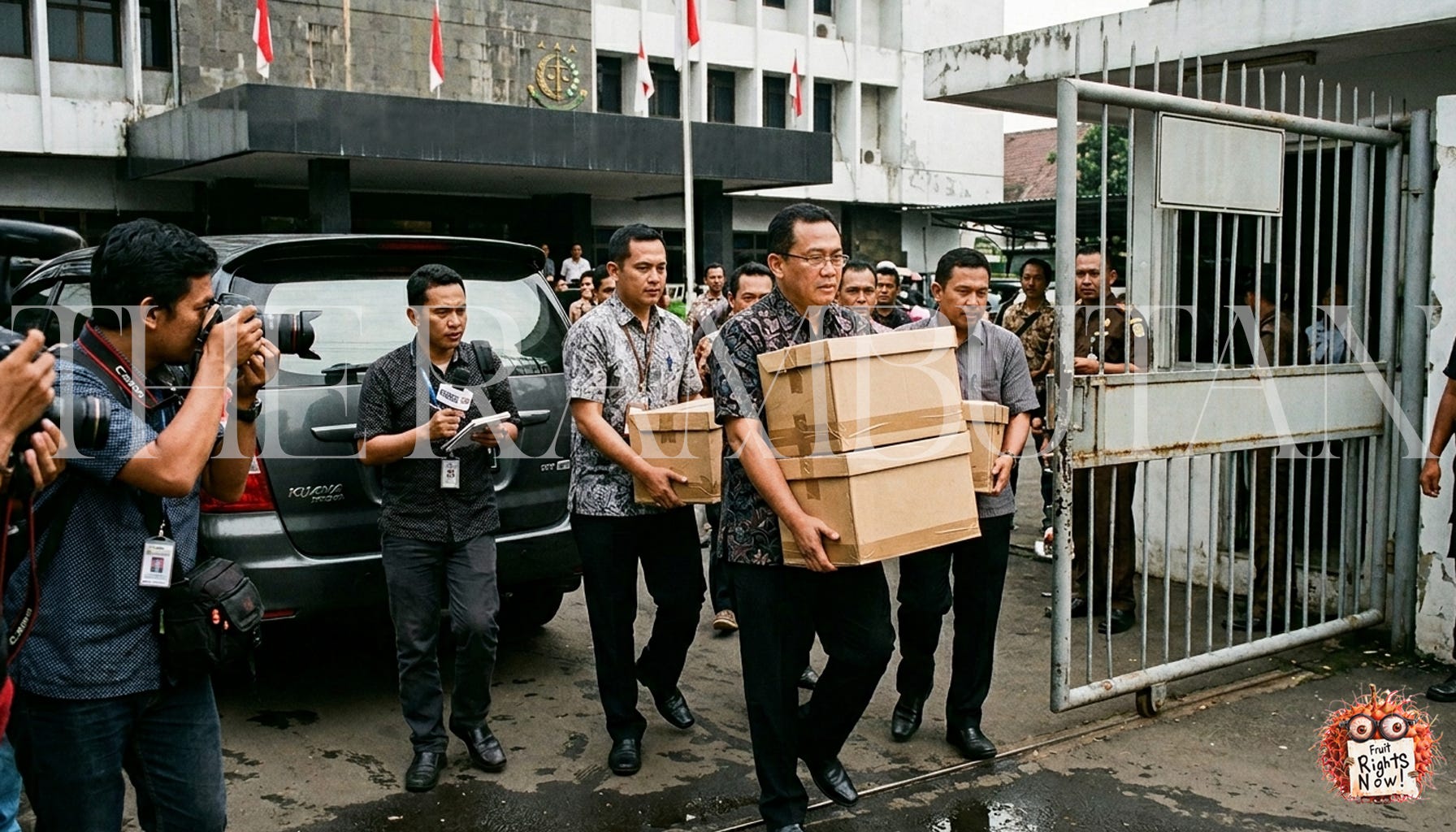
JAKARTA — Indonesia’s Free Nutritious Meals Program received unexpected praise this week after anti-corruption prosecutors confirmed the initiative had successfully kept their offices well fed for months.
The program, originally launched to provide meals for schoolchildren and vulnerable communities, has come under scrutiny after investigators began examining alleged irregularities in procurement, budgeting, and implementation. While supporters continue to defend the initiative as a historic investment in public welfare, investigators say it has already delivered more than enough material to justify its existence.
“Whatever concerns people may have about implementation, this program has produced results,” said one investigator. “Not necessarily the results listed in the policy brief, but results.”
According to people familiar with the matter, investigators have been reviewing contracts, vendor arrangements, budget approvals, and internal communications related to the program, prompting a spokesperson to reject suggestions that the program had lost sight of its purpose.
“The children remain at the very center of this initiative,” the spokesperson said. “That is why they are mentioned repeatedly in the documents.”
The spokesperson added that implementation issues were expected in a program of this scale and that officials were committed to improving oversight, strengthening accountability, and identifying who was responsible for saying accountability had already been strengthened.

Outside Jakarta, in a village near Klaten, Central Java, parents said they were encouraged to learn the Free Nutritious Meals Program was active somewhere.
“My son keeps asking when the meals will arrive,” said Sari, a mother of two, while packing rice and tempeh into a plastic container before school. “I told him to be patient. These things take time, especially when so many adults need to hold meetings about them first.”
Several parents said they still supported the idea of free meals in schools, but were beginning to suspect their children had taken the word “soon” more literally than intended.
That expectation had also reached the local elementary school, where teachers said students had been asked not to get their hopes up whenever an official vehicle passed by, as it was usually either lost, or carrying someone scheduled to explain the delay.
By late afternoon, officials said the program remained a national priority and urged the public not to judge a national initiative solely by its most controversial week.
In its next phase, the program is expected to focus on improving coordination across the initiative, including a review of why so many coordination meetings had recently produced mostly new coordination meetings.
Investigators, meanwhile, said their work would continue as part of a broader effort to ensure the program could move forward with stronger safeguards and fewer surprises.
For families still waiting, officials asked for patience, noting that a program of this size takes time to reach every classroom. Parents said they understood, though many hoped the meals would arrive before their children became old enough to join one of the coordination meetings.
We write the headlines that haven’t happened yet, but probably will. Subscribe to The Rambutan for Southeast Asia’s sharpest fake news.