


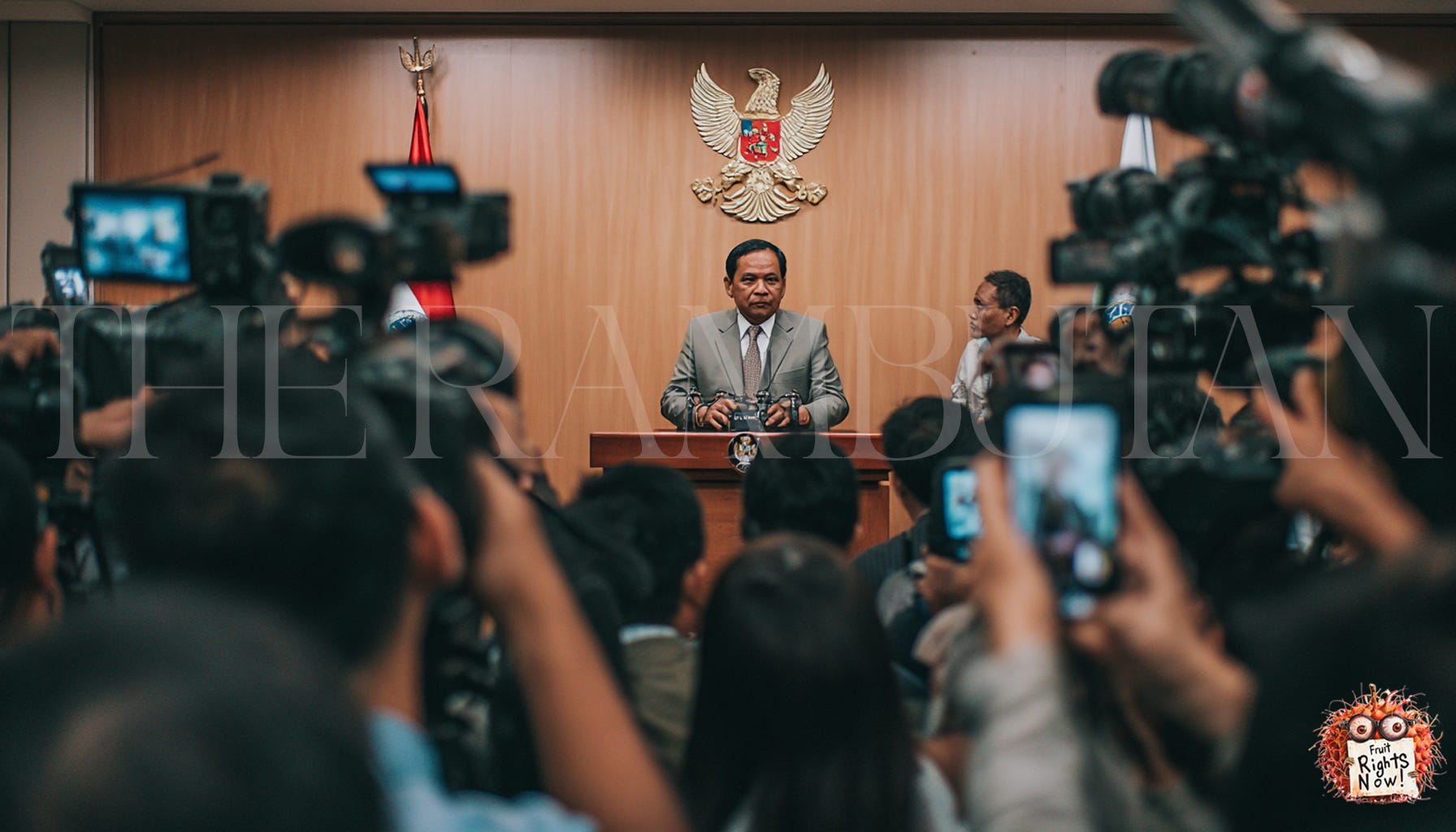
JAKARTA — Indonesia enacted a new Penal Code this week that officially criminalizes insulting the President; a clause widely believed to be inspired by a very personal reading of the nation’s YouTube comment section.
The legislation, part of Indonesia’s newly updated Criminal Code, which also criminalizes sex outside of marriage, and cohabitation, was hailed by supporters as a major step forward in making sure that no one ever feels uncomfortable, especially if their title starts with “Mr.” and ends in “President.”
But within hours of the law’s implementation, the internet responded with the solemn dignity it’s known for: by roasting the law, the president, and the entire legal process with the creative energy of a thousand stand-up comedians.
According to official sources, the new article under the criminal code (replacing colonial-era Dutch laws with something somehow even older in spirit) prohibits “publicly insulting the dignity of the president or vice president,” punishable by up to 3.5 years in prison. Or slightly longer if the insult comes with a funny Photoshop.
Spokesperson Haryono Setiawan defended the law, saying,
“This is about protecting the dignity of the nation’s leaders, not silencing criticism. People are still free to express their thoughts. Just… you know, nicely. And preferably while clapping.”
When asked how one could disagree with the president without being arrested, Setiawan replied, “Have you tried writing a poem?”

In response. the formation of a specialized Cyber Expression Monitoring Task Force, or CEMTF (pronounced ‘sem-tef’) has been announced.
The task force’s goal? To distinguish between “legitimate political discourse” and “comments made with too much sass.”
“We’re not cracking down on freedom of speech,” clarified CEMTF spokesperson Dewi Hartono. “We’re just ensuring that sarcasm is kept at a respectful 2 out of 10.”
However, digital activists have raised concerns about the ambiguity of the law. “What if I say, ‘The president is doing great… at pretending to lead.’ Is that 3 years in prison or just community service?” asked one concerned netizen, before disappearing from the comment thread entirely.
While Jakarta’s stock exchange showed modest reactions to the new legal code, Indonesia’s underground meme economy exploded. Encrypted group chats on Telegram and Discord have reportedly become thriving hubs of dissent, with one sticker pack titled “Legal Until Proven Otherwise” being downloaded over 30,000 times.
Even local businesses have joined in. A Jakarta café recently renamed its weakest coffee blend the “Presidential Roast” and now offers a discount to anyone who says they’re “very proud of our totally infallible leaders” in a monotone voice at checkout.
When asked about the digital backlash, a spokesperson insisted that “all citizens are welcome to express their opinions, as long as those opinions are about how much they love the president.”
We write the headlines that haven’t happened yet, but probably will. Subscribe to The Rambutan for Southeast Asia’s sharpest fake news.