


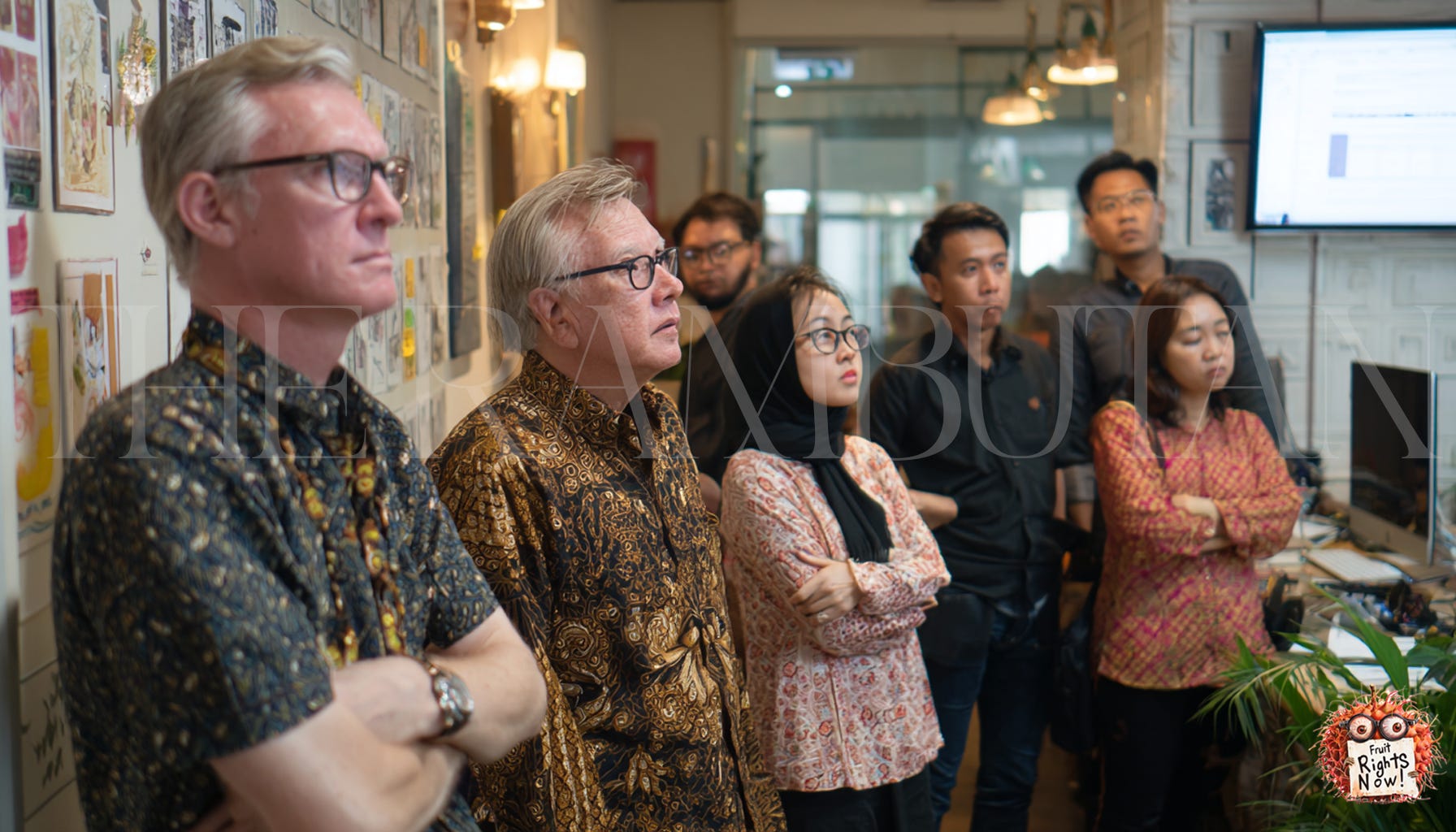
JAKARTA — Indonesia’s startup ecosystem has officially submitted a request to be designated a UNESCO World Heritage Site, citing its status as the “largest living example of unchecked optimism, venture-funded chaos, and the complete erosion of financial accountability.”
The proposal, backed by several of the country’s top venture capital firms, argues that the local startup scene is “a fragile cultural ecosystem, which must be preserved for future generations to admire, study, and possibly meme.”
“We believe the ecosystem meets all UNESCO criteria,” said Andi Gunawan, spokesperson for the Indonesian Startup Heritage Committee. “It’s intangible, it’s uniquely Indonesian, and much like ancient ruins, most of it doesn’t work anymore.”
At a press conference, Gunawan pointed to the impressive track record of billion-dollar valuations backed by no revenue, no roadmap, and absolutely no working product. “The sheer scale of the collective suspension of disbelief is breathtaking,” he said. “It would be irresponsible not to preserve this.”
According to UNESCO’s guidelines, a World Heritage Site must have outstanding universal value. Local VCs argue that the Indonesian startup bubble qualifies on several fronts, chief among them being its innovative redefinition of capitalism itself.
“Where else in the world can you raise $20 million for an idea pitched at a family BBQ?” said Rizky Pradana, a VC partner who has invested in 14 startups founded by his cousins and former classmates. “This is a place where founders disrupt nothing but still cash out before the Series A pitch is even printed.”
Critics have noted that the investment process in Indonesia often skips trivial formalities like due diligence, product-market fit, or even having a product. “That’s part of the charm,” said Pradana. “This is a culture that believes in people. Especially if those people went to the same high school as your aunt.”

Proponents of the UNESCO nomination argue that the ecosystem’s beauty lies in its fragility. One junior associate at a prominent local VC firm described the system as “a delicate balance between investor FOMO and founder delusion.”
“This is a sacred place,” he whispered. “Where else do companies go from pitch deck to $100 million valuation without anyone asking what they do?”
The application to UNESCO includes several proposed protective measures, such as:
Strict conservation of buzzword biodiversity, including endangered phrases like “hyperlocal scalability” and “Uber, but for…”
Preservation of ancient traditions, such as the sacred founder-VC golf trip.
When asked whether the ecosystem might collapse before UNESCO gets around to reviewing the application, one founder shrugged. “Even if it does, we’ll just pivot to calling it a historical reenactment project. That should unlock a new round of funding.”
Despite international skepticism, insiders remain confident that Indonesia’s startup bubble will not only be preserved but studied in business schools for decades. “People focus too much on things like sustainable growth and unit economics,” said another anonymous VC. “But what about narrative? What about raising $15 million to disrupt laundry?”
Meanwhile, startup founders across Jakarta are reportedly already preparing for the post-UNESCO funding bump. “This will be great for visibility,” said one founder, who has already updated his pitch deck to include the words “culturally significant” and “globally protected hype environment.”
When asked if his startup had any actual customers yet, he smiled confidently and said, “No, but with UNESCO involved, I’m pretty sure they’ll come.”
We write the headlines that haven’t happened yet, but probably will. Subscribe to The Rambutan for Southeast Asia’s sharpest fake news.