


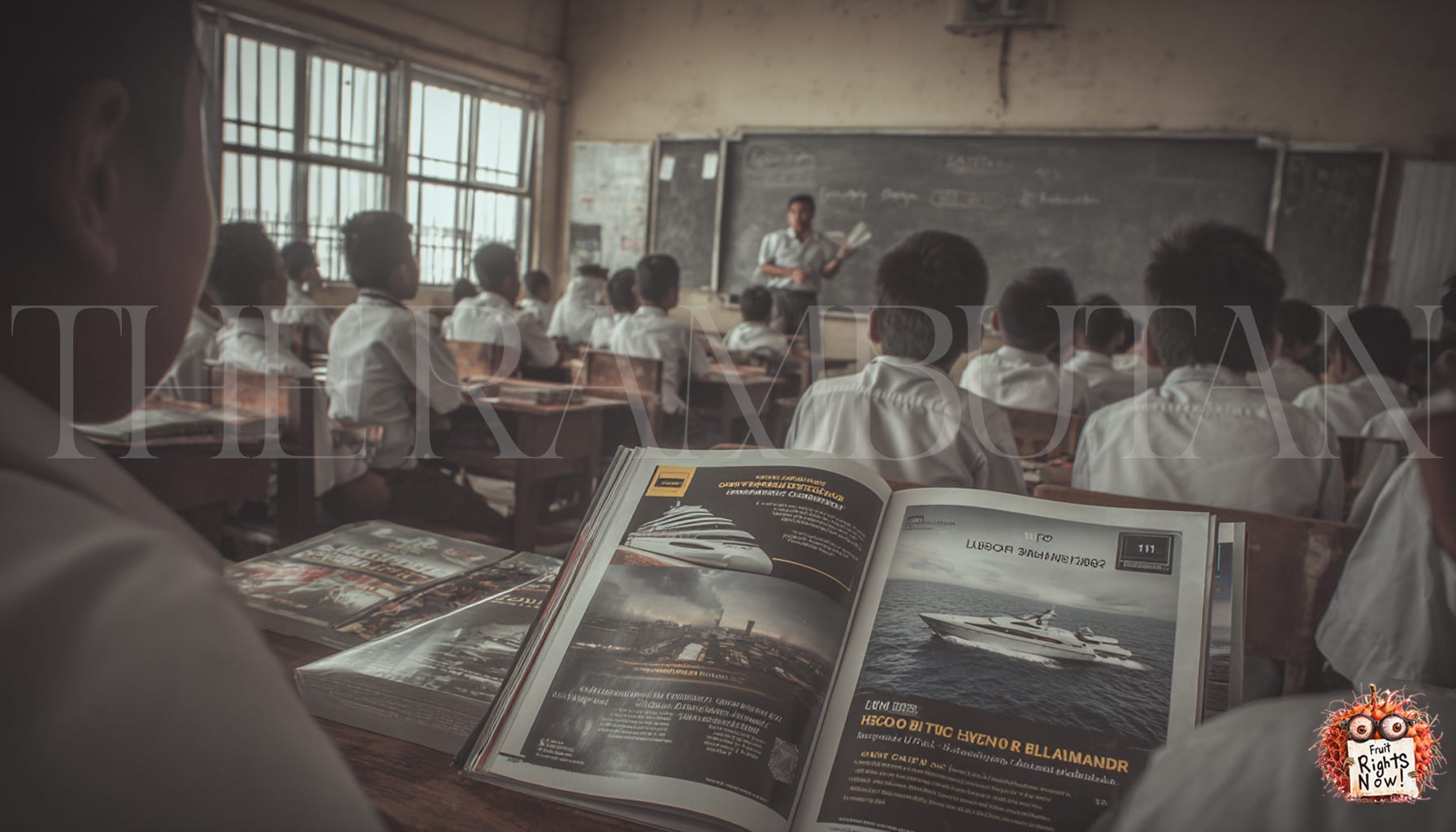
JAKARTA — Indonesia has announced a sweeping overhaul to the national curriculum. Starting next academic year, Indonesian schoolchildren will be taught that billionaire oligarchs are not “corrupt,” “connected,” or “hilariously lucky,” but simply “exceptionally good at business.”
“It’s time we stopped vilifying success,” said ministry spokesperson Iqbal Santoso during a press conference held in the VIP lounge of Soekarno-Hatta Airport, moments before boarding a taxpayer-funded flight to Geneva.
The new economics textbook, “Entrepreneurial Excellence: From Forestry Permits to Fortune,” is co-authored by an anonymous palm oil magnate, a former state contractor, and a Swiss wealth advisor. The book is designed to “nurture capitalist ambition” in students as young as 9.
Chapter titles include:
“What Is a Tender Process and How to Avoid One”
“Strategic Nepotism: Family Ties as a Growth Leve”
“Why Transparency Is Unpatriotic”
Officials have clarified that this initiative is not about promoting any one lifestyle, but about equipping students with practical life skills, such as identifying a cousin at the Ministry of Trade.
“We’re simply aligning the curriculum with the realities of our economy,” said Santoso. “Not everyone can code. But everyone can learn which family to marry into.”
Schools will replace traditional business education with “Strategic Proximity Management” and “Advanced Kickback Theory.” Children will roleplay as junior advisors drafting unsolicited proposals for toll road concessions. Class rankings will be based on how quickly they can set up an offshore trust fund without triggering a domestic audit.
Ethics classes will remain on the syllabus but will now be merged with gym. Students will be encouraged to jog while debating whether conflict of interest rules apply if no one is technically “in conflict.”
Teachers’ unions have expressed concerns, particularly about the replacement of financial literacy with a new module called “Luxury Asset Appreciation Studies.” One teacher, speaking on condition of anonymity said: “They want us to explain inflation using the resale value of yachts. What are we doing?”

To promote real-world learning, the Ministry will launch a “Billionaire Buddy” exchange program, where selected students can shadow high-net-worth individuals on trips to luxury shopping malls, golf resorts, and court hearings.
Students will also participate in mock tender bidding exercises where they compete to award public contracts to fictitious relatives. Top performers will receive letters of recommendation from actual tycoons.
When asked whether this rebranding of oligarchs as entrepreneurial heroes might erode public trust in governance, Santoso dismissed the claim as “an outdated Marxist reaction to luxury.”
“If a man buys a $45 million house in Singapore while his country can’t afford textbooks, that’s not a scandal,” Santoso explained. “That’s aspiration.”
Public reaction to the announcement has been mixed. While some critics worry the move normalizes corruption and entrenches plutocracy, others have praised the effort for “finally telling kids how the game is actually played.”
As for the textbook’s unnamed palm oil magnate co-author? A spokesperson declined to comment, citing a tight schedule, but confirmed he was currently busy “mentoring a promising young entrepreneur whose father chairs the land commission.”
We write the headlines that haven’t happened yet, but probably will. Subscribe to The Rambutan for Southeast Asia’s sharpest fake news.