


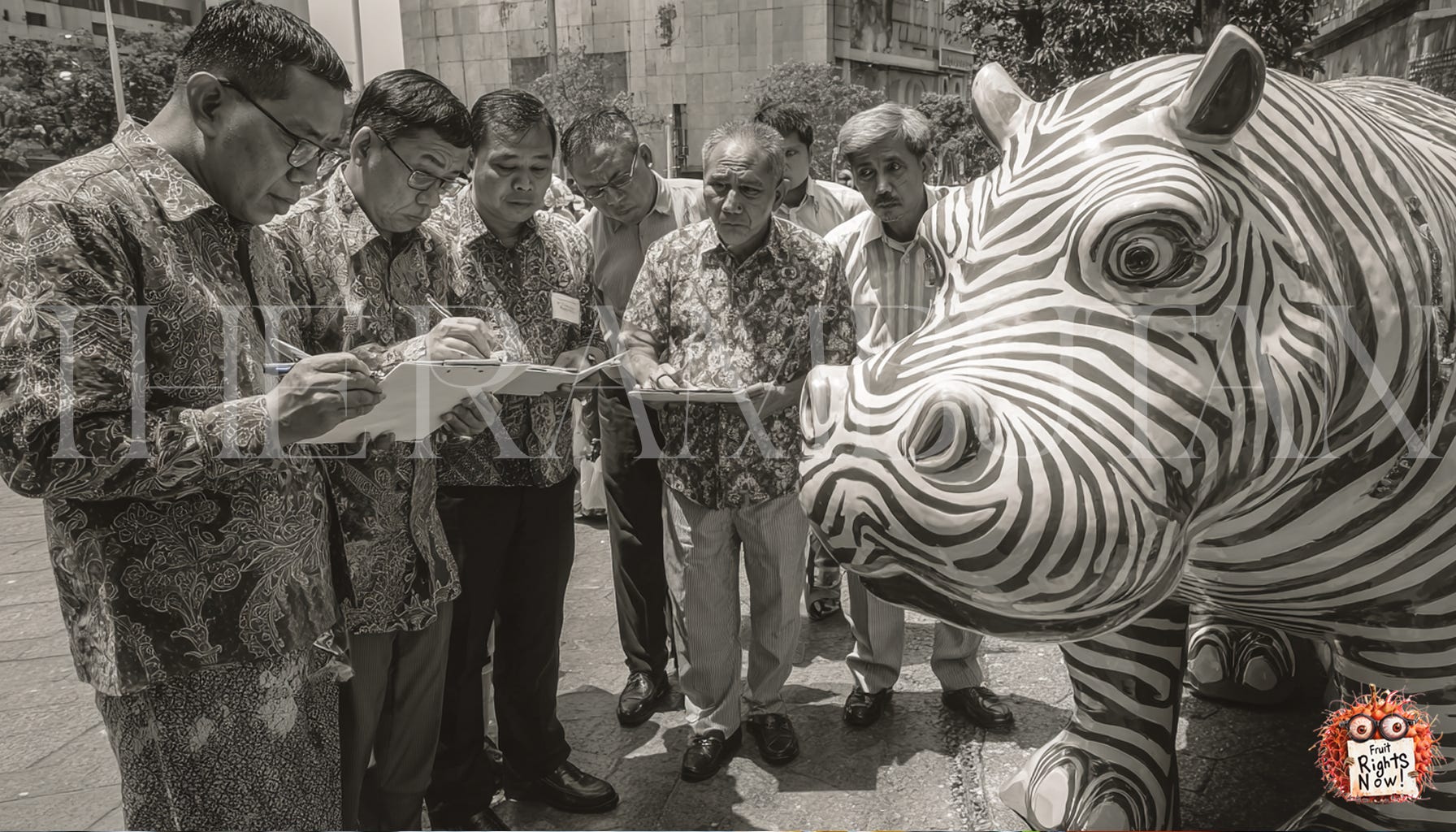
KEDIRI — Local government officials on Monday urged the public to “focus on the deeper meaning” of Kediri’s newly unveiled White Tiger statue after images of the monument went viral nationwide, prompting widespread confusion over whether the statue depicts a tiger, a zebra, or an animal yet to be formally classified by science.
Standing approximately four meters tall, the statue was originally commissioned to symbolize Kediri’s historic association with the mythical White Tiger. Instead, it has become one of Indonesia’s most shared cultural objects of the week, largely due to online users insisting that it looks “nothing like anything.”
“This statue is not intended to resemble a literal animal,” said a visibly composed Kediri Cultural Affairs spokesperson during a press conference. “It is symbolic. If you are looking for anatomical accuracy, you have fundamentally misunderstood art, culture… and also this statue.”
According to the Kediri Regency Government, the statue’s design was finalized after extensive consultation with artists, and historians.
“The White Tiger is a spiritual symbol,” explained one official. “It is not bound by biology, zoology, or what people expect a tiger to look like based on documentaries.”
When asked why the statue appears to have unusually rounded features, a short snout, and legs that some viewers claim “suggest a strong hippopotamus influence,” officials clarified that the artist was expressing “inner ferocity.”
The local government also rejected accusations that the statue was poorly executed or rushed, stating that the work was completed “on schedule and with full confidence.”
“We are disappointed that people are laughing instead of reflecting,” said another spokesperson. “This statue invites contemplation. For example: What is a tiger, really? And who decides?”

As criticism continued to trend across social media, regional tourism authorities quickly moved to reframe the controversy as an opportunity.
“This is good,” said a tourism office representative. “Before, nobody was talking about Kediri. Now everyone is arguing about stripes.”
Plans are reportedly underway to rebrand the statue as a “conversation destination,” with proposed signage explaining that visitors are “not expected to understand the statue, only to experience it.”
Merchandise concepts under consideration include T-shirts reading ‘Not a Tiger’, plush toys shaped vaguely like animals, and guided tours where staff refuse to answer direct questions.
Local vendors near the statue have already reported increased foot traffic.
“I don’t know what animal it is,” said one street food seller. “But I’ve sold more bakso this week than ever.”
We write the headlines that haven’t happened yet, but probably will. Subscribe to The Rambutan for Southeast Asia’s sharpest fake news.