


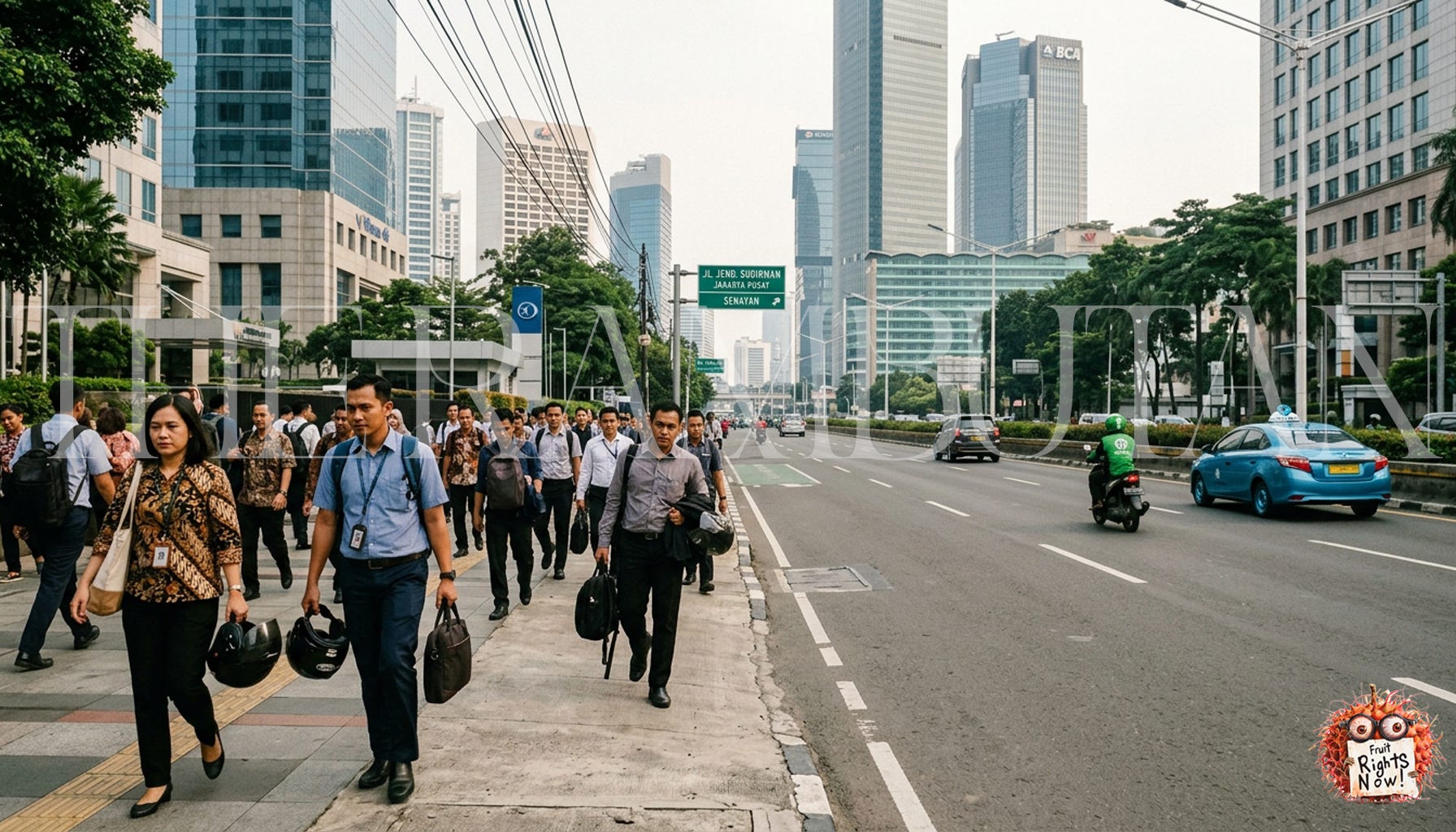
JAKARTA — Indonesia’s recent Pertamax price hike has been praised as an innovative government initiative to encourage millions of citizens to rediscover walking.
Officials, speaking at a press conference, described the increase in fuel prices as “a historic public health intervention” that could succeed where decades of wellness campaigns have failed.
“For years, we have encouraged Indonesians to walk 10,000 steps per day,” said a spokesperson. “Unfortunately, many citizens ignored us. But after the Pertamax adjustment, people are suddenly very motivated to walk everywhere. This proves the program is working.”
According to analysts, the fuel price increase has already produced dramatic behavioral changes across the country. Office workers in Jakarta are reportedly studying walking routes with the same seriousness usually reserved for home-loan agreements. Motorcycle owners in Bekasi have begun asking philosophical questions such as, “Do I truly need to visit my cousin?”
The Health Ministry says these are exactly the kinds of lifestyle reflections Indonesia needs.
“For too long, our people have relied on motor vehicles for simple daily activities,” said an official. “Now, thanks to fuel prices, they are learning to rely on their legs, and public transport.”
The ministry released early projections suggesting the average urban Indonesian could increase daily walking by 400 percent, mostly through pacing in front of petrol stations, walking away from petrol stations, and circling back to petrol stations to check whether the number on the sign was real.

Across Jakarta, citizens have begun adapting to the government’s new fuel-powered fitness regime.
In Central Jakarta, commuters along Sudirman-Thamrin were seen engaging in what officials described as “urban wellness corridors,” though participants described the experience as “walking because we have no choice.” Several pedestrians were observed checking fuel prices on their phones, sighing deeply, and then continuing forward.
Public health experts have also praised the secondary benefits of the policy. Fewer unnecessary trips could reduce traffic congestion, and vehicle emissions. One urban planner said the price hike may finally achieve what no transport master plan could: convincing people that maybe the meeting could have been an email.
Meanwhile, small businesses have begun adapting to the new reality. Some coffee shops are offering “walker discounts” to customers. Several warung owners have introduced loyalty programs where customers receive one free iced tea after every 40,000 steps. A gym in Tebet is reportedly considering closing its treadmill section, since members now get enough cardio just commuting there.
Buoyed by the apparent success of the Pertamax fitness initiative, several ministries are reportedly studying whether similar health outcomes could be achieved by adjusting the prices of other essential goods.
One proposal would encourage intermittent fasting through strategic food inflation. Another would promote better sleep by making electricity expensive enough that families turn off all lights by 8:30 p.m. Officials have also discussed a mental-resilience program in which citizens are encouraged to develop patience through longer queues, and slower bureaucracy,.
In a statement, the Health Ministry said it would continue monitoring the impact of fuel prices on national movement patterns, especially among residents who previously believed walking more than 600 meters was an activity reserved for pilgrims, athletes, and people whose motorcycles had broken down.
We write the headlines that haven’t happened yet, but probably will. Subscribe to The Rambutan for Southeast Asia’s sharpest fake news.