


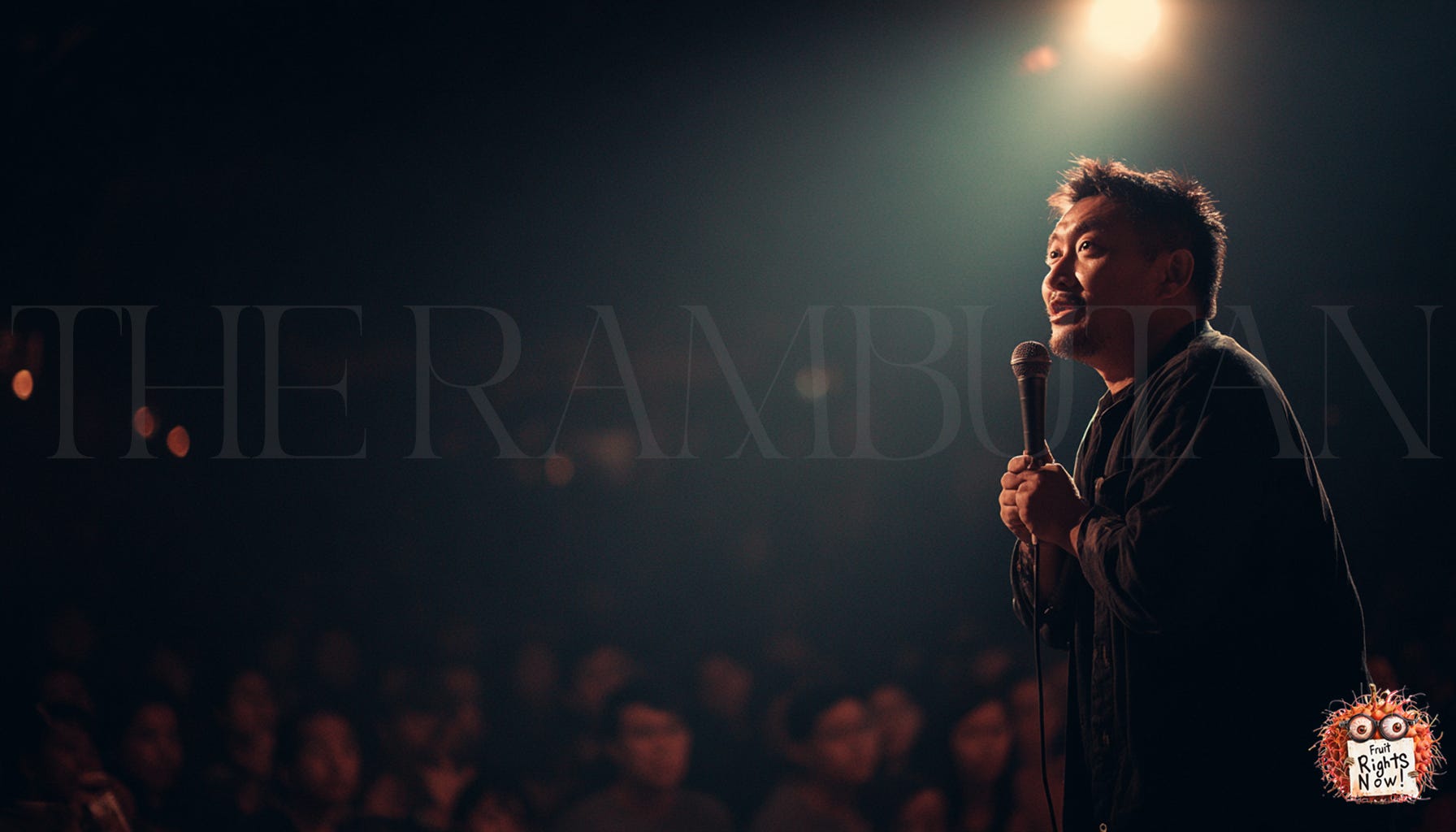
JAKARTA — A growing schism erupted across Indonesia’s internet this week as millions of netizens grapple with a difficult question: is stand-up comedy still a valid form of humor, or has it become a low-level criminal offense?
The national debate reignited after a clip featuring a local comedian making a mildly sarcastic observation about a government policy resurfaced online, triggering a four-way flame war between comedy fans, moral police, actual police, and Twitter academics.
As hashtags like #StandupBukanBullying, #KomediMenyimpang, and #PandjiDiSidang trended on X (formerly Twitter), citizens were left wondering whether they should laugh, or report the joke to authorities.
In response to the mounting confusion, officials were quick to clarify the legal status of stand-up comedy, assuring the public that it remains perfectly legal, except in cases where any person, institution, demographic group, city, profession, religion, animal species, or national motto feels disrespected.
“We support free expression,” said spokesperson, Rizky Gunawan, during a press briefing. “Stand-up comedians are absolutely allowed to speak their minds… just not in public, not with microphones, and not while being recorded.”
He added that as long as jokes remained “non-political, non-personal, non-cultural, non-topical, and non-humorous,” there would be no issue.
Comedians, meanwhile, are adapting. One open-mic performer in Tebet debuted a 15-minute routine about rice. “Just rice,” he confirmed. “Not rice prices. Not rice policy. Not rice shortages. Just the existence of rice. I have to be able to go home.”

Audience reactions to recent comedy shows have shifted noticeably, with more people choosing to sit silently.
“I want to laugh,” said Laila, one audience member, lowering her voice, “but I’m not sure if the CCTV is recording.”
Others described a more fundamental change in how comedy is consumed. “We used to go to comedy shows to relax,” said Dina, 27. “Now we go to assess risk.”
Even comedians themselves are beginning to turn on each other. After the Pandji incident, a rival comic was quoted as saying, “Look, I love free speech. But also I would love his Saturday slot.”
Cultural critics remain divided. Some argue this chilling effect will be the death of artistic expression, while others say this is simply comedy adapting to Indonesia’s unique legal climate.
“Who says we need jokes to laugh?” asked a spokesperson. “There’s plenty of humor in bureaucratic procedure.”
We write the headlines that haven’t happened yet, but probably will. Subscribe to The Rambutan for Southeast Asia’s sharpest fake news.