


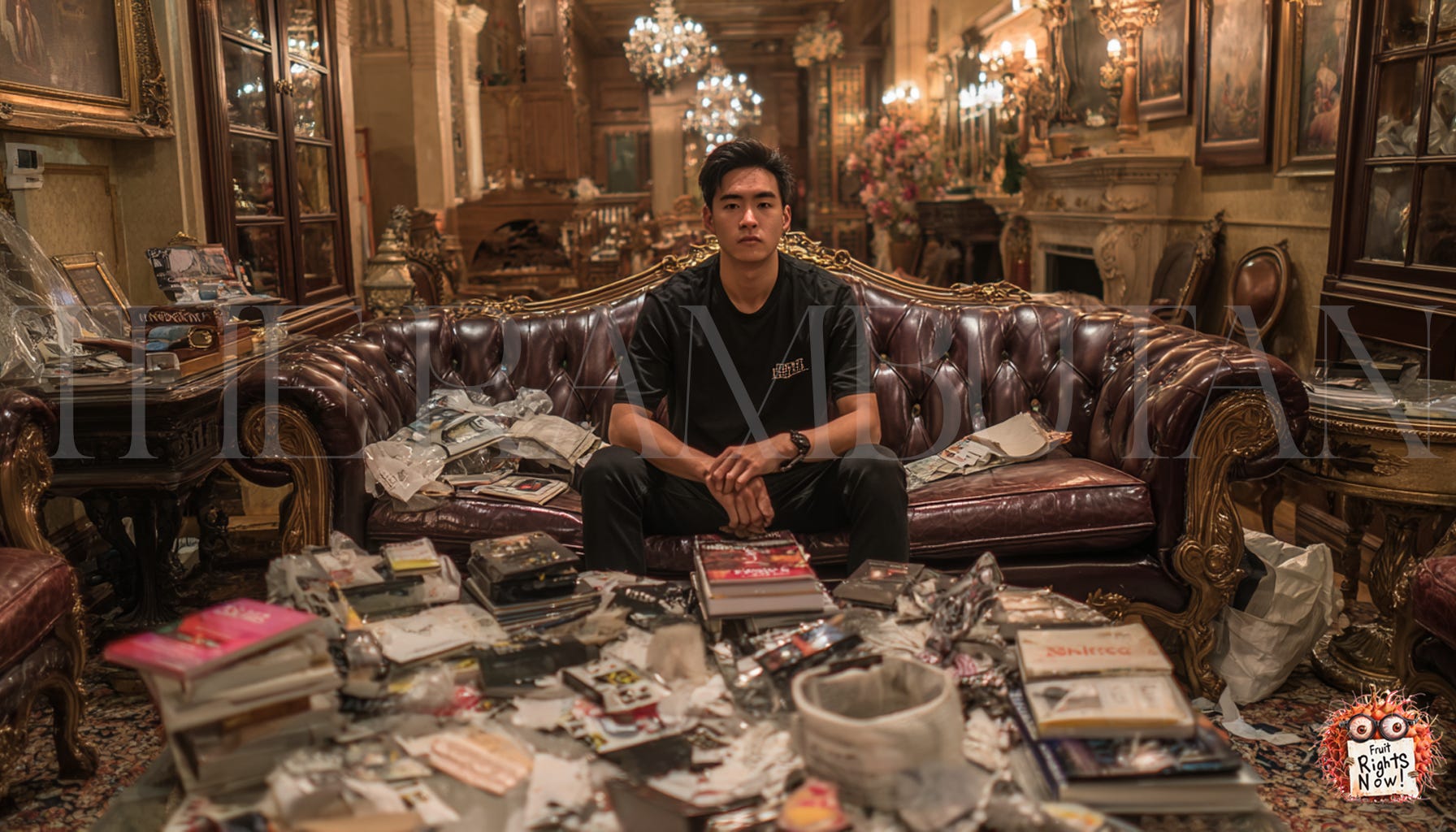
JAKARTA — In an emotional press conference held at his father’s 58-story corporate headquarters, local nepo baby and part-time visionary Ardy Wijaya announced the closure of his fourth failed startup in three years, citing the overwhelming burden of being “too privileged to succeed.”
“Honestly, I never stood a chance,” Ardy said, wearing an oversized Balenciaga hoodie and holding back tears. “When you’ve never taken public transport or been yelled at by a boss, it’s hard to find that hunger. People say struggle builds character, but like… where do you even buy that?”
Ardy’s latest venture, “Shrnk,” a minimalist platform that allowed users to digitally condense their already-short emails into even shorter ones, officially ceased operations last week after burning through Rp 17 billion in angel investment, 97% of which came from his family’s cement empire.
Ardy’s entrepreneurial journey began shortly after his “gap decade,” a ten-year break taken after high school to “find himself in Milan, Seoul, and Coachella.” Inspired by the hardship of being stuck in business class during a flight delay, Ardy founded his first startup, ParkPal, an app designed to help drivers locate empty valet staff at shopping malls.
Despite its immediate failure due to lack of functionality and the fact that “valets aren’t that hard to find,” Ardy pressed on. His second venture, Spoonful, attempted to disrupt the porridge industry with AI-generated congee flavors like “Wasabi Durian” and “Salted Caramel Tempe.” Consumers and nutritionists alike begged him to stop.
His third attempt, TokoTok, was pitched as “Bukalapak meets Clubhouse meets Web3,” which Ardy confidently described as “something everyone will pretend to understand.” The app lasted six weeks, and ended with a class-action lawsuit after it mistakenly auctioned off a user’s actual grandmother.
Still, Ardy remained undeterred.
“Each failure brought me closer to understanding the market,” he said. “And what I’ve realized is… this is the market’s fault.”

In a heartfelt 17-tweet thread, Ardy explained that his lack of success wasn’t due to bad ideas or management negligence, but a profound absence of trauma.
“Look, if I had been rejected by even one university, maybe I’d have something to prove. If my dad hadn’t installed a meditation room on my 11th birthday, maybe I’d know how to regulate my emotions,” he wrote.
Sources confirmed that Ardy was raised in Jakarta’s exclusive Menteng district, schooled abroad, and was given his first board seat at age 19 “as a learning opportunity.” Former mentors say he was a quick learner when it came to pitching, pivoting, and rebranding failure as “market misalignment,” but less effective when asked to do things like “read” or “follow through.”
“Adversity is a critical teacher,” Ardy explained during a podcast interview recorded in his family’s unused private cinema. “But I was raised in an environment where the worst hardship I faced was running out of imported Fiji water during a blackout. That kind of softness… it stays with you.”
Despite this most recent setback, Ardy remains optimistic about the future. “Every end is just the beginning of my next LinkedIn post,” he said, before announcing a pivot to “impactful, founder-to-founder consulting,” where he plans to help other privileged children avoid the same mistakes he made, like launching a company without a monetization strategy, or hiring all your friends from a ski trip.
When asked about his qualifications for consulting, Ardy responded confidently: “I’ve failed four startups. That’s more experience than success.”
At press time, Ardy was seen taking a phone call from his father while looking deeply out over the Jakarta skyline.
“He said maybe I should take a little break and just run the family company for a bit,” Ardy sighed. “Honestly, I’m not ready. But I guess I’ll try. It’s just... so hard when you’ve had it so easy.”
We write the headlines that haven’t happened yet, but probably will. Subscribe to The Rambutan for Southeast Asia’s sharpest fake news.