


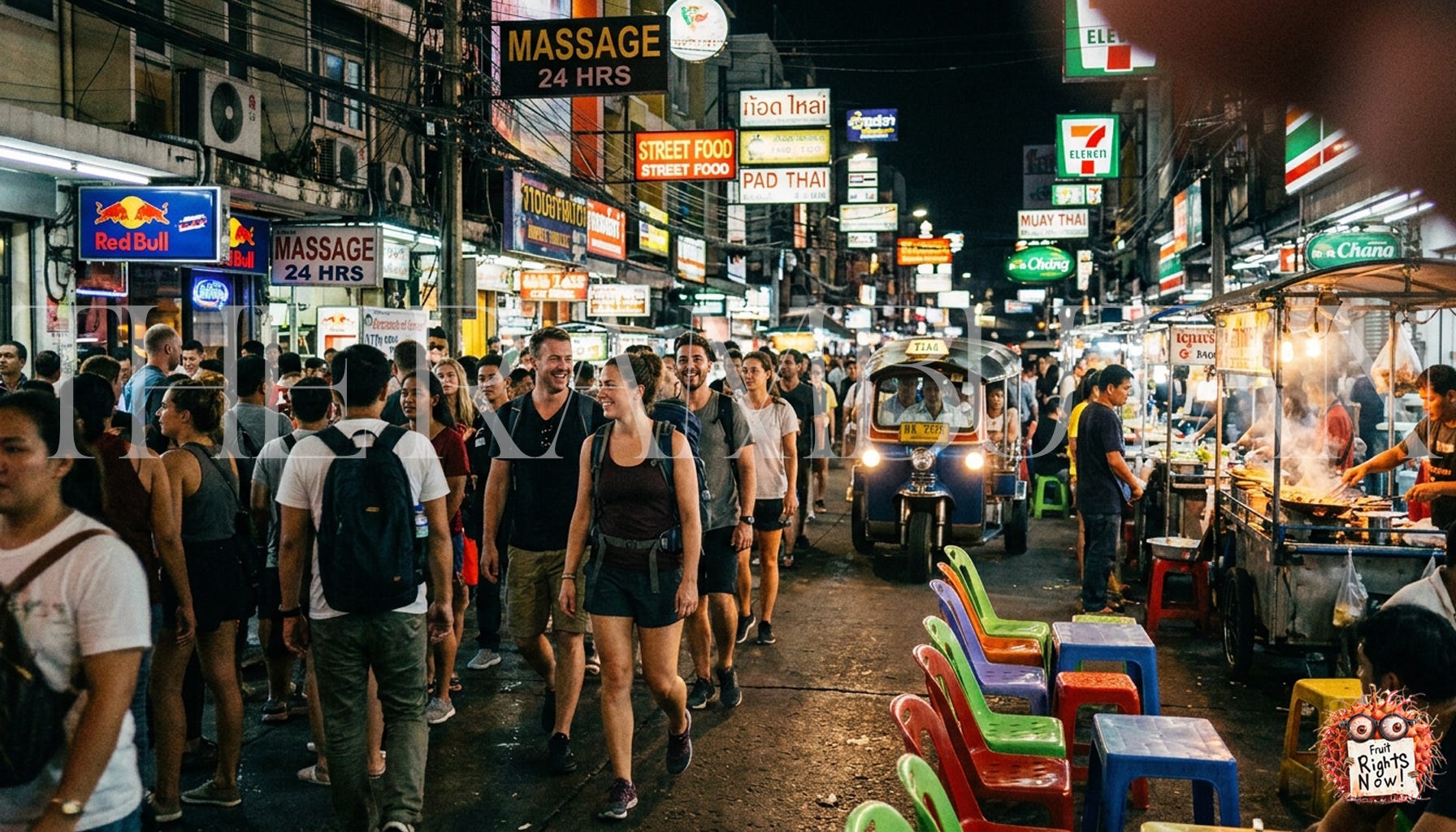
BANGKOK — Thai officials have reportedly proposed reducing the visa-free stay period from 60 days to 30 days after a government study found that most foreign visitors become “annoying” by day 12.
The study, conducted by a special cross-ministerial task force, concluded that while international visitors provide an important source of income for the Thai economy, they also begin to exhibit “advanced backpacker behaviors” far earlier than previously expected.
“We used to believe tourists became irritating somewhere around the 45-day mark,” said Deputy Tourism Quality Coordinator Prasert Wattanachok, speaking at a press conference. “But our new findings show that by day 12, many visitors have already purchased a sleeveless Chang shirt, and told a taxi driver they ‘basically live here now.’”
The government report, which officials say took six months to complete, identified a predictable pattern of tourist behavior.
During the first three days, visitors are generally considered “polite, and economically useful.” They take photos of mango sticky rice, and ask whether Bangkok is near Phuket.
By day seven, however, warning signs begin to appear.
“At this stage, many tourists start believing they have discovered a secret Thailand unknown to locals,” the report states. “They may also begin using the phrase ‘authentic local spot’ to describe restaurants that accept Apple Pay and serve smoothie bowls.”
By day 12, the situation reportedly deteriorates.
Officials found that visitors at this stage are significantly more likely to ask Muay Thai trainers whether they could “maybe fight professionally,” and post online that Thailand has changed since they arrived.
“This is the dangerous window,” Prasert explained. “They have not been here long enough to understand Thailand, but they have been here exactly long enough to start giving advice about it.”

The visa proposal is being promoted as part of Thailand’s broader push for “quality tourism.”
“We want tourists who appreciate Thailand,” said Tourism Strategy Consultant Siriporn Dechkul. “We simply prefer that appreciation to remain in the early honeymoon phase, before they begin saying things like ‘as someone who has spent considerable time in Southeast Asia.’”
Siriporn said 30 days should be more than enough time for a high-quality tourist to visit Bangkok, take a cooking class, ride in a tuk-tuk, and briefly consider moving to Koh Phangan.
Local residents have largely welcomed the proposal.
“I support anything that reduces the number of foreigners standing shirtless outside 7-Eleven at 2 a.m. explaining crypto,” said Bangkok resident Nattapong “Note” Chaiyaporn, who lives near a popular nightlife district. “Thirty days is generous. Personally, I think we should base it on behavior. First offense: warning. Second offense: mandatory cultural orientation. Third offense: direct flight home.”
Not everyone is pleased with the proposed change. Some long-stay travelers argue that reducing visa-free stays would unfairly punish responsible visitors.
“This is discrimination against people who need 60 days to find themselves,” said 34-year-old British traveler Callum Peters, who described himself as a wellness entrepreneur, and part-time DJ.
“I came here because Thailand is spiritual,” he said. “Now the government is saying I have to leave before I even get my Sak Yant tattoo.”
Immigration officials responded by noting that tourists who wish to stay longer may still apply for other visa categories, provided they complete the proper paperwork, and meet eligibility requirements.
“This is not a ban,” said one official. “This is simply a reminder that visa-free entry is not a human right, even if a man from Berlin with dreadlocks says it is.”
We write the headlines that haven’t happened yet, but probably will. Subscribe to The Rambutan for Southeast Asia’s sharpest fake news.