


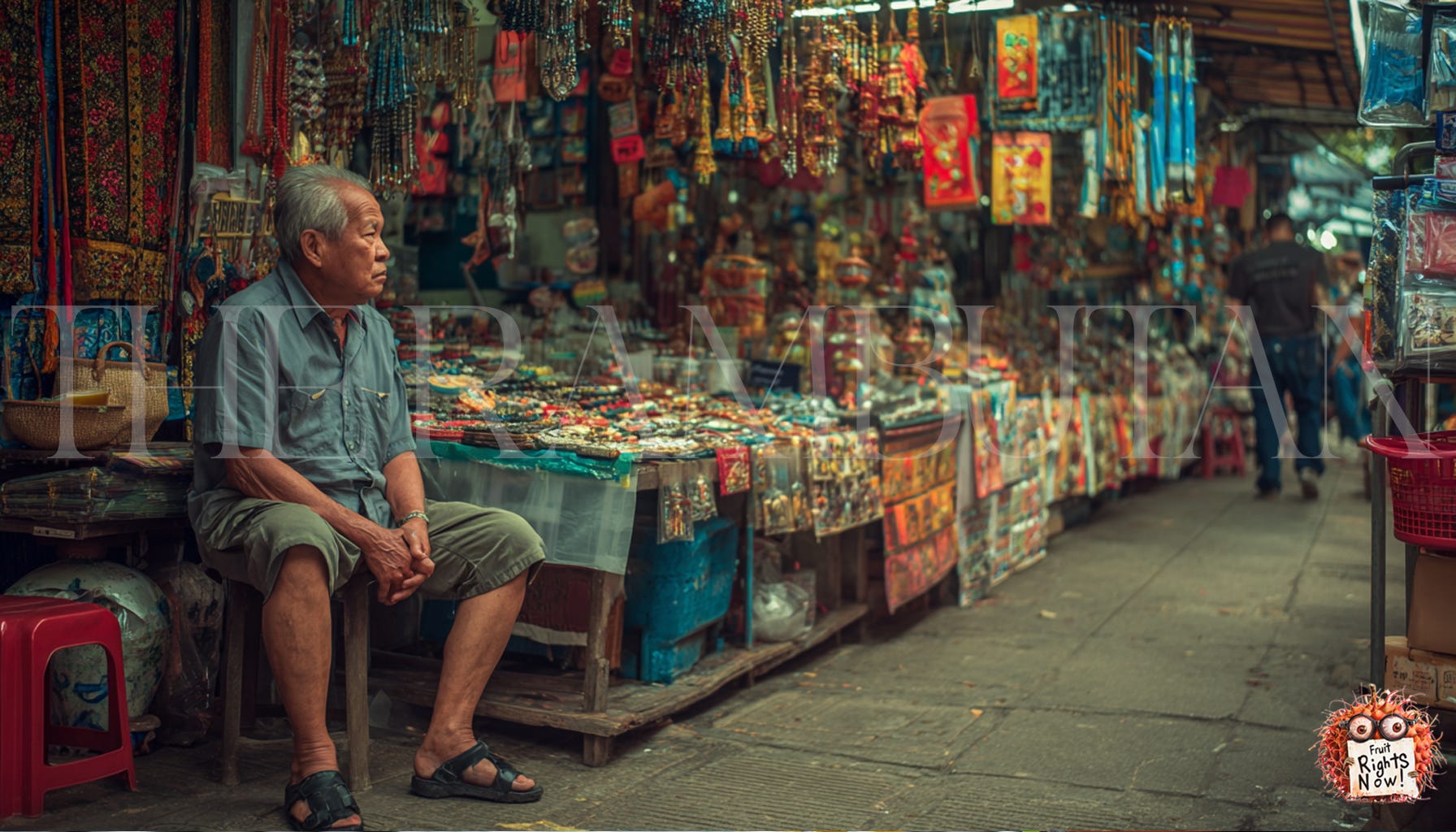
BANGKOK — Thailand’s Tourism Authority moved to calm public concern this week after new figures showed a noticeable decline in foreign arrivals, assuring citizens, business owners, and remaining tourists that the downturn would ultimately “improve authenticity” across the kingdom.
At a press briefing, officials stressed that Thailand was never meant to be experienced by too many people at once, and that the recent drop in visitors should be viewed not as an economic setback but as a long‑overdue cultural correction.
“Authenticity requires space,” said one senior tourism official. “And now we finally have it.”
According to the Tourism Authority, quieter streets, emptier temples, and noticeably fewer foreigners asking where to find the nearest weed shop are all signs that Thailand is entering a more refined phase of tourism.
Officials explained that Thailand has been unintentionally offering mass tourism for decades, when what it truly excels at is selective absence. With fewer visitors arriving, destinations once overwhelmed by crowds are now being rebranded as intentional experiences.
“Before, when tourists didn’t show up, people called it a problem,” said a spokesperson. “Now we understand it was always the product.”
Popular destinations such as Phuket, Krabi, and Chiang Mai are being repositioned as “low‑density cultural sanctuaries,” while Bangkok’s unusually navigable sidewalks are being described internally as “urban mindfulness corridors.”
One official confirmed that fewer foreign tourists also dramatically improves authenticity by reducing the need for English menus, westernized breakfast options, and staff trained to politely explain that no, this is not Bali.

While some business owners initially expressed confusion about the new messaging, many have begun adjusting their expectations accordingly.
In Patong, a restaurant that once served full tables of tourists now proudly advertises itself as an “authentic empty dining environment,” offering guests the rare chance to sit alone and reflect on regional cuisine without distractions.
“I used to worry when nobody came,” said one café owner in Chiang Mai. “Now I tell myself this is what real Thailand feels like.”
A tuk‑tuk driver in Bangkok noted that although he now makes fewer trips per day, each ride carries greater cultural weight.
“Before, I drove many tourists very fast,” he said. “Now I drive one tourist slowly. This is more authentic.”
Despite the decline, tourism leaders remain optimistic that the strategy of having fewer tourists will attract tourists who are specifically looking for places with fewer tourists.
“This is a natural cycle,” said an analyst close to the industry. “First you have too many visitors. Then you have fewer visitors. Then you tell everyone that fewer visitors is the reason to visit.”
When asked whether the country might eventually want tourist numbers to rise again, officials clarified that growth would only be welcomed if it happened authentically.
Until then, authorities say the nation should embrace this moment of cultural clarity.
“Sometimes,” the spokesperson concluded, “the best way to preserve authenticity is to stop so many people from showing up to see it.”
We write the headlines that haven’t happened yet, but probably will. Subscribe to The Rambutan for Southeast Asia’s sharpest fake news.