


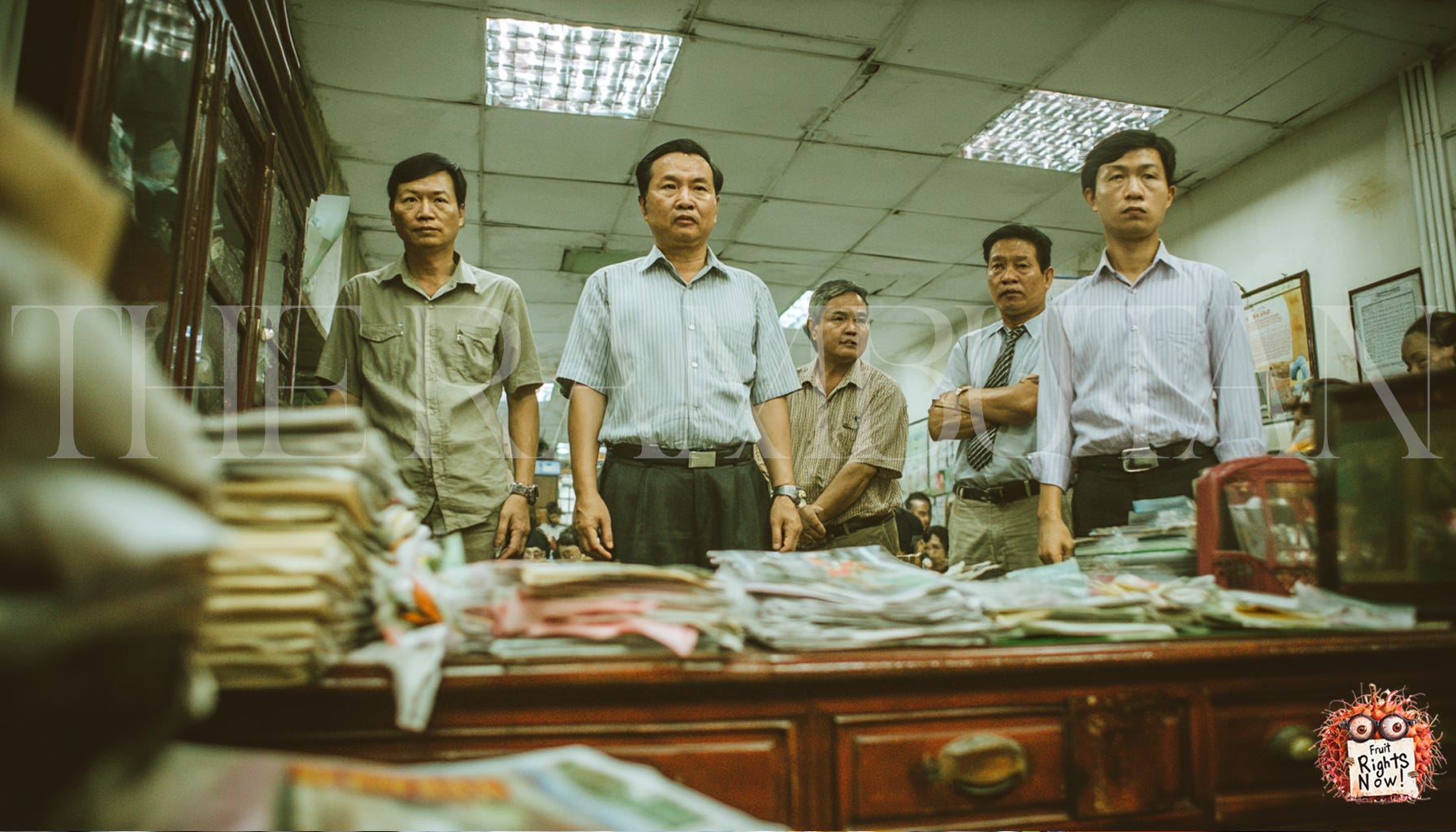
HANOI — Vietnam’s anti-corruption campaign reached what authorities described as a “natural and highly encouraging conclusion” this week, after investigators confirmed that several senior officials had exhausted all available drawers, cabinets, safes, envelopes, briefcases, desk organizers, and hollowed-out hardcover books in which to store undeclared cash.
According to the Central Steering Committee for Anti-Corruption, the breakthrough came not from advanced forensic accounting or whistleblower testimony, but from a far simpler realization: there was nowhere left to put the money.
“At a certain point, the laws of physical space begin to assist governance,” said Deputy Inspector General Phạm Văn T. “When every drawer is full, every envelope is labeled, and every office chair squeaks suspiciously, corruption becomes much harder to manage.”
The investigation reportedly intensified after anti-graft officers noticed a recurring pattern during routine office inspections: desks that appeared structurally incapable of closing.
“In one ministry alone, we encountered a filing cabinet that had achieved what can only be described as monetary density,” said Lieutenant Colonel Nguyễn Đức H. “You open the drawer, and it opens back at you.”
Authorities say the average senior office now contains four to six cash drawers, two “temporary drawers,” one “emergency drawer,” and at least one drawer officially designated for “documents” but widely understood to be “overflow.”
One official, speaking on condition of anonymity, admitted the situation had become unmanageable.
“At first it was fine,” he said. “You receive an envelope here, a package there. You tell yourself, ‘This is temporary. I’ll organize it later.’ But then you’re late for a meeting, the drawer jams, and suddenly you’re living in fear...”
The Ministry of Construction has since issued new safety guidance warning that overloaded desks may pose both structural and ethical hazards.

As traditional hiding places filled up, investigators observed increasingly desperate attempts to innovate.
Among the methods reportedly uncovered:
Cash wrapped in official meeting minutes
Banknotes hidden inside framed portraits of national leaders
One case involving money sealed inside a rice cooker
In a particularly notable raid, officers found a senior administrator had begun hiding cash in his staff’s drawers, citing “inter-ministerial cooperation.”
“That’s when we knew the system was under stress,” said one investigator. “Corruption had gone horizontal.”
Government leaders have hailed the development as proof that the campaign is working, even if not in the way originally envisioned.
“We never said corruption would end because of morality,” said political analyst Lê Minh Q.
At a recent National Assembly session, lawmakers applauded new proposals encouraging officials to transition toward “drawer-free governance,” clear desks, and transparent cabinets.
One reform-minded official told reporters he has already begun adjusting to the new reality.
“Now when someone offers me an envelope, I have to ask a very serious question,” he said. “Where would I even put this?”
Public reaction has been cautiously optimistic. On social media, citizens praised the campaign for finally addressing corruption at its root cause.
Meanwhile, manufacturers of office desks have reported a sharp decline in demand for multi-drawer models, with consumers favoring minimalist designs.
As of press time, authorities confirmed that investigations would continue until either all corruption is eliminated or someone invents a new kind of drawer, whichever comes first.
We write the headlines that haven’t happened yet, but probably will. Subscribe to The Rambutan for Southeast Asia’s sharpest fake news.